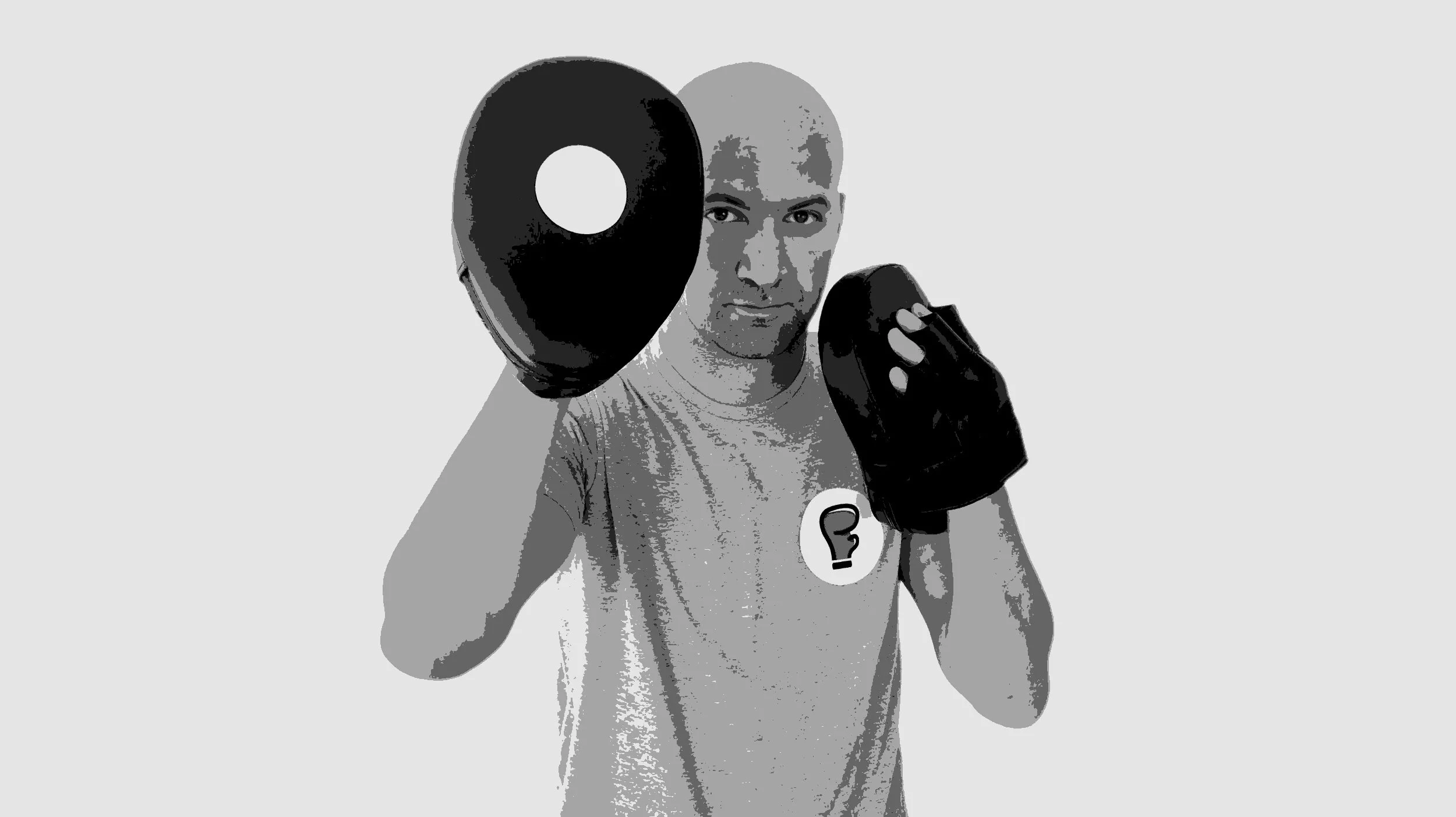
Decoding the Pugilistic Paradox: Is Ambiguity in Boxing Instruction a Bug or a Feature?
You've probably heard them in the boxing gym: "Sit on your punches." "Use your weight." "Be relaxed but explosive." If you're new to boxing, these phrases can feel less like instruction and more like riddles wrapped in a mystery, tied with a sweaty glove.
For decades, boxing gyms have been bastions of this kind of ambiguous, metaphorical language. But what’s really going on here? Is this vagueness a pedagogical failure, hindering progress, or a crucial, even subtle, tool for creating champions?
Let's put on our critical thinking gloves and dissect this fascinating paradox.

The Heart of the Matter: Why is Boxing Instruction So Vague?
Our core question: To what extent does the use of metaphorical and non-precise language in boxing instruction facilitate or impede the mastery of complex biomechanical movements across different levels of expertise?
It's not just about what's being said, but how it's being understood and, crucially, how it impacts the fighter in training and in the ring.
Breaking Down the "Old School" Approach
To understand why coaches talk in riddles, you have to look at what they’re actually trying to achieve. While the surface goal is teaching you to fight, they are also trying to protect the gym’s "style" and a certain "tough" culture. The real struggle is linguistic: they’re trying to turn a physical sensation, proprioception, into words. They use mental shortcuts (heuristics) because they want you to learn by "feel" rather than by memorising a list of rules. Their proof that it works? The "naturals" and world champions who just seemed to "get it" without needing a manual.
However, this approach relies on a few shaky assumptions. A coach assumes you’ll automatically know what a metaphor like "sitting on your punches" means for your own body. Often, it’s simpler: the coach might not have the technical vocabulary to explain the actual physics. If a student doesn't understand, the coach might unfairly decide they "lack heart" or "fighting instinct," when really, the instruction just wasn't clear enough.
The fallout from this is real. In the short term, it leads to confusion, messy technique, and a higher risk of injury. In the long run, this "sink or swim" style filters out smart, analytical thinkers who need proper feedback to improve. It creates a gap between the Traditionalist, who sees boxing as a subjective art based on "feel," and the Sports Scientist, who sees it as a series of precise, mechanical movements.
Evaluating the "Vague" Approach
When we hold traditional boxing coaching up to higher standards, some serious cracks begin to show. In terms of clarity and precision, the old-school approach is often found wanting. Telling a fighter to "get low" is far too vague, it means different things to different people and lacks the specific angles a sport scientist might use. This also raises a fairness issue; by relying on riddles, coaches tend to favour "naturals" who learn by watching, while accidentally side-lining analytical thinkers who need a logical breakdown to improve.
That said, there is a certain accuracy to these methods. Even if the language is "airy-fairy," the cues can still produce the right result if the boxer is intuitive. These metaphors tap into a deep, subconscious "feel" for the game, even if they ignore the underlying physics. It follows a "master and apprentice" logic—where you learn by being around greatness, rather than a scientific one that works for everyone.
Ultimately, while the relevance of coaching is undeniable, the traditional way of thinking is often a bit lazy. It relies on a "sink or swim" model where only those who happen to understand the coach's code actually make it. While this has produced champions in the past, it’s a fragile way to teach because it leaves too much to chance.
The Counter-Argument: Vague for a Reason?
A fairminded opposing view would be that ambiguity isn't a flaw, but a feature. The main goal is to prevent "paralysis by analysis." In the middle of a fast-paced scrap, you simply don't have the time to consciously process ten different biomechanical steps before throwing a lead hook.
The logic here is that metaphorical cues trigger a total body response much faster than detailed technical manuals. Phrases like "be like water" help a fighter find a "flow state," where the body moves as one. This approach is highly relevant to live combat because it acknowledges that, when the pressure is on, fighting is intuitive rather than intellectual.
While these cues are excellent for performance under pressure, their main weakness is a lack of precision during the early stages of training. A beginner might struggle to build the correct habits if they are only given abstract metaphors instead of clear, technical foundations..
Elevating the Craft: A Hybrid Pedagogy
So, what's the solution? How do we get the best of both worlds, the intuitive "feel" and the precise understanding?
The answer lies in a Hybrid Pedagogy with a tiered approach to clarity:
Phase 1: The Foundation (High Precision). Start with precise, biomechanically accurate language. "Rotate the lead foot to 45 degrees, driving through the hip, keeping the opposite hand high." This builds the correct motor pattern.
Phase 2: The Refinement (Analogies & Imagery). Once the basic mechanic is understood, introduce metaphors that connect to known sensations or simpler actions. "Squash the bug with your foot," "turn your hips like wringing a towel." This bridges the gap between mechanical understanding and bodily feel.
Phase 3: The Application (High Ambiguity/Heuristics). In live sparring or performance, use short, rhythmic, almost primal cues to trigger the now-engrained movement. "Pop it!", "Explode!", "Relax!" These serve as triggers for established patterns, not as initial instructions.
This improved approach prioritizes accuracy in learning and logic in performance. It embraces the best of both worlds: the analytical rigor that builds a strong foundation, and the intuitive flow that wins fights.
The next time you hear a cryptic instruction in the gym, remember: it might be an antiquated shortcut, or it might be a subtle trigger for a movement you've already unconsciously mastered. The best instruction will guide you through both.