Do Personal Trainers Make London Better? An Unfiltered Look at Their Hidden Impact
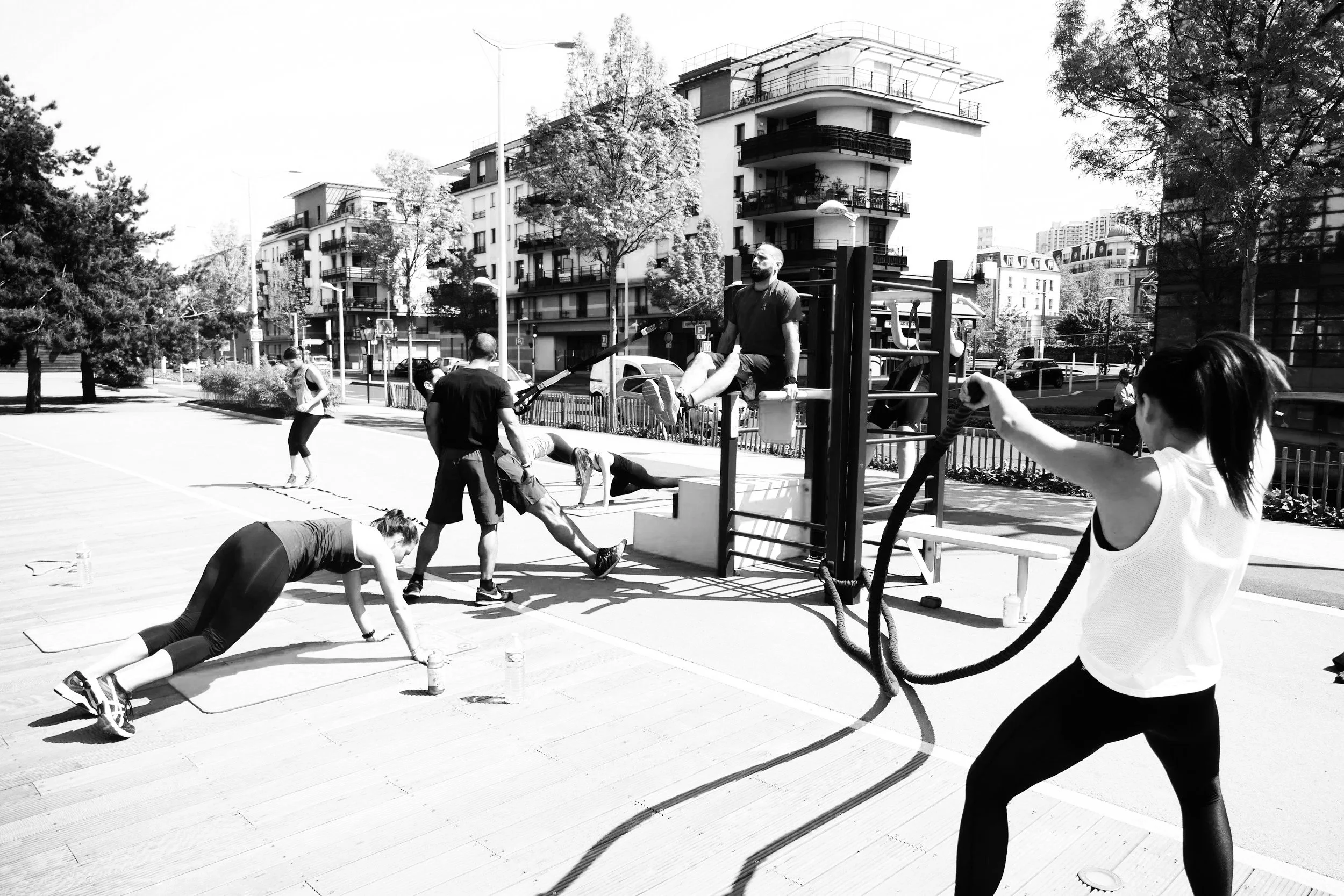
Walk through Battersea Park at 6:30 AM or Highbury Fields at dusk, and you’ll see them: neon-clad groups lunging, sprinting, and sweating under the direction of a personal trainer (PT).
To the casual observer, it’s just a private workout. But for those of us interested in how cities actually work, there is a bigger question at play. Is the PT industry providing a massive, unpaid-for benefit to London as a whole? Or are they simply privatising our precious green spaces for profit?
Let's look at the "Social Value" of the London trainer through a critical lens.

1. The £123 Billion Ripple Effect
In November 2025, Sport England released a landmark social value report. It revealed that physical activity now generates an estimated £122.9 billion in annual value for the UK.
The "side-effect" here is profound. By keeping Londoners active, PTs are part of a system that prevents over 3.3 million cases of chronic health conditions annually, including depression, type 2 diabetes, and back pain.
The Logic: Every £1 spent on community sport and physical activity delivers a £4.38 return for the economy and society.
The Side-Effect: While the client pays for the trainer, the NHS saves £8 billion in direct healthcare costs because that client is less likely to end up in a GP surgery or an A&E ward.
2. "Eyes on the Street": The Safety Dividend
Urbanist Jane Jacobs famously argued that safe cities require "eyes on the street"—active, engaged people who make a space feel lived-in and watched.
Personal trainers are often the "first responders" of the park. They are there during the "shoulder hours"—those pre-dawn and post-twilight windows when parks can feel desolate or unsafe.
The Logic: A group of ten people doing burpees makes a park feel safer for a lone runner or someone walking to the station.
The Reality: PTs provide a consistent, professional presence that deters anti-social behaviour simply by being there.
3. Paying Their Way: The "Land Levy"
A common criticism is that PTs are "freeloaders" on taxpayer-funded land. However, the data shows that London’s boroughs have become very efficient at capturing this value.
Most boroughs now operate strict licensing schemes. For example:
The Royal Parks (Hyde Park, Regent’s Park, etc.) can charge over £1,000 per year for group fitness licences.
Southwark and Tower Hamlets have tiered fees based on group size, ensuring that "commercial" use of the park feeds back into its maintenance.
According to a September 2025 London Assembly report, parks are under immense financial pressure. The "side-effect" of PTs here is that their licensing fees provide a vital, non-statutory revenue stream that helps keep the grass cut and the bins emptied for everyone else.
The Critical Flip-Side: Is it All Positive?
A fair-minded analysis requires us to look at the friction points:
The Noise Factor: At 6 AM, a shouting coach and a portable speaker aren't a "social asset" to the residents living 20 yards away.
Spatial Inequality: PTs are a premium service. If the best parts of our parks are consistently occupied by high-paying clients, does the average Londoner feel "crowded out" of their own common land?
The "Premium" Barrier: While the health benefit is real, it is currently skewed toward those who can afford £50+ an hour. The real "betterment" of London would come from scaling this model to underserved communities.
The Verdict: A Net Positive with a "But"
The reasoning holds: Personal trainers do make London better. They act as a decentralized health service, an informal security force, and a source of park funding.
However, for this to be a true "London-wide" win, the industry needs to move toward the "Urban Synergy" model:
Direct Reinvestment: Ensuring 100% of PT licence fees stay within the specific park they are earned in.
Community Credits: Encouraging trainers to swap "park time" for free community sessions in lower-income wards.
Standardised Conduct: Enforcing "quiet zones" to respect the residents who share the city's green lungs.
Personal training is no longer just a luxury service; it’s a tiny, essential gear in the machine that keeps London healthy, safe, and funded.