
The Boxing Stance
Introduction
There is a common assumption that boxers are free move however they want but in reality a carefully structured stance makes all the difference between winning and losing.
While it may appear that boxers stand casually in the ring, the reality is entirely different. Every posture and movement must be shaped for the task of hitting and not getting hit. The ideal boxing stance provides a precise balance of stability and mobility, enabling a fighter to attack and defend while maintaining balance. Every fighter refines their stance over years of experience to maximize their strengths and minimize their weaknesses.
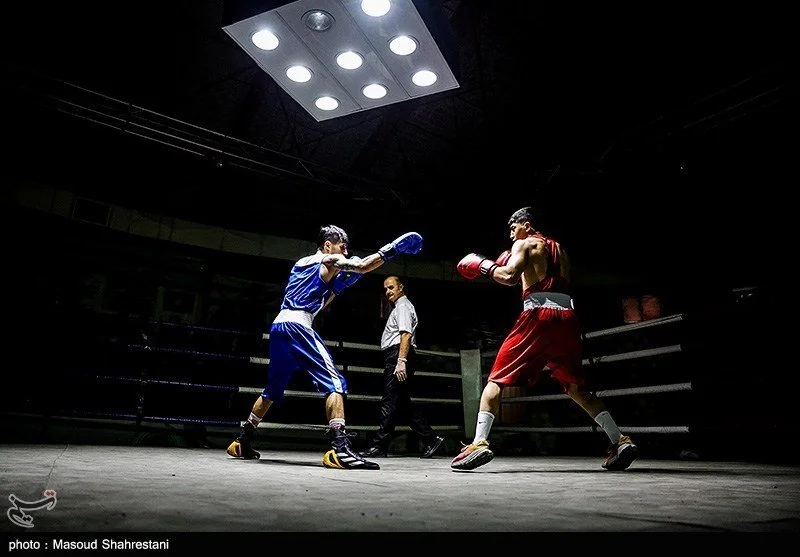
Tasnim News Agency/ CC-BY-4.0. Used for educational illustration; inclusion does not imply endorsement by the licensor.
_Tasnim.jpg)
Two Types of Stance
1. Orthodox
Foot Alignment: Begin with your feet shoulder-width apart, then step your right foot back.
Heel Orientation: Turn both heels at a 45-degree angle. Ensure your feet remain on separate parallel tracks (like walking on train tracks) rather than standing on a single tightrope.
Lower Body Activation: Lift your rear heel slightly off the canvas. Keep your knees softly bent to act as shock absorbers and springs for sudden movement.
The Guard: Pin both elbows flush against your ribs to protect your body. Keep your wrists completely straight.
Fist Structure: Tuck your fingers into your palms first, then fold your thumbs securely across the outside of your knuckles.
Head Position: Post both hands directly at your chin and tuck your chin down behind your lead shoulder.
Lead Hand Position: Extend the lead hand with the elbow slightly bent, the fist aiming at the opponent.
2. Southpaw
Foot Alignment: Begin with your feet shoulder-width apart, then step your left foot back.
Heel Orientation: Turn both heels at a 45-degree angle, maintaining parallel tracks between the front and rear feet.
Lower Body Activation: Lift your rear heel slightly up. Bend the knees softly to maintain an athletic, responsive foundation.
The Guard: Keep your elbows tucked closely against your ribs and your wrists straight.
Fist Structure: Tuck the fingers first, then secure the thumbs over the outside.
Head Position: Bring your hands up to your chin and tuck your chin firmly down.
Lead Hand Position: Extend the lead hand with the elbow slightly bent, the fist aiming at the opponent.
Common Mistakes to Avoid
Correcting these fundamental stance errors will immediately improve your balance and prevent you from being easily hit:
Standing Too Side-On or Square: Standing completely side-on cuts off your rear power hand, while standing flatly square makes you a wide, easy target for straight punches up the middle.
Awkward Toe Tracking: Pointing your toes at erratic, exaggerated angles, which disrupts your balance and delays your footwork.
Standing Flat-Footed: Dropping your rear heel flat to the canvas, which anchors you in place and robs you of explosive movement.
Locking the Knees: Standing completely rigid. Locked knees stop you from shifting your weight smoothly and leave you off-balance if you get hit.
Flaring the Elbows: Letting your elbows wing out sideways, exposing your liver, ribs, and spleen to body shots.
Bent Wrists: Allowing your wrists to sag or bend, which causes severe joint strain upon impact.
Improper Thumb Placement: Tucking your thumbs inside your fingers. This is a dangerous habit that can easily lead to a fractured or dislocated thumb when landing a punch.
Hands Under the Chin: Holding your hands low around your chest or neck, which leaves your jaw completely unprotected.
Lifting the Chin High: Keeping your head upright. A high chin is a prime target for a knockout punch; it must always stay tucked safely behind your guard.
Historical Roots
A fighter's stance is their posture that prepares for every punch, block, and counter. While certain core principles of the boxing stance have remained timeless, others have changed, shaped by shifts in rules, equipment, and the unique personalities and experiences of individual fighters.
Notice the similarities and differences in, for example, the position of the rear hand and the use of a centreline in the historical examples below:

“Jack Dempsey” (1927) by Raoul Paoli, via Wikimedia Commons. Public Domain.
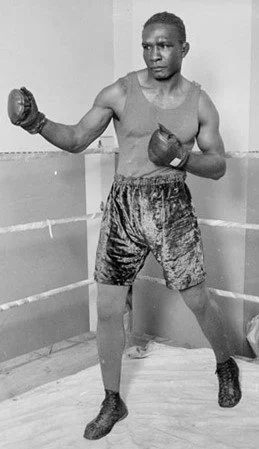
“Tiger Flowers portrait LOC” (c. 1924) by Bain News Service, via Wikimedia Commons. Public Domain.
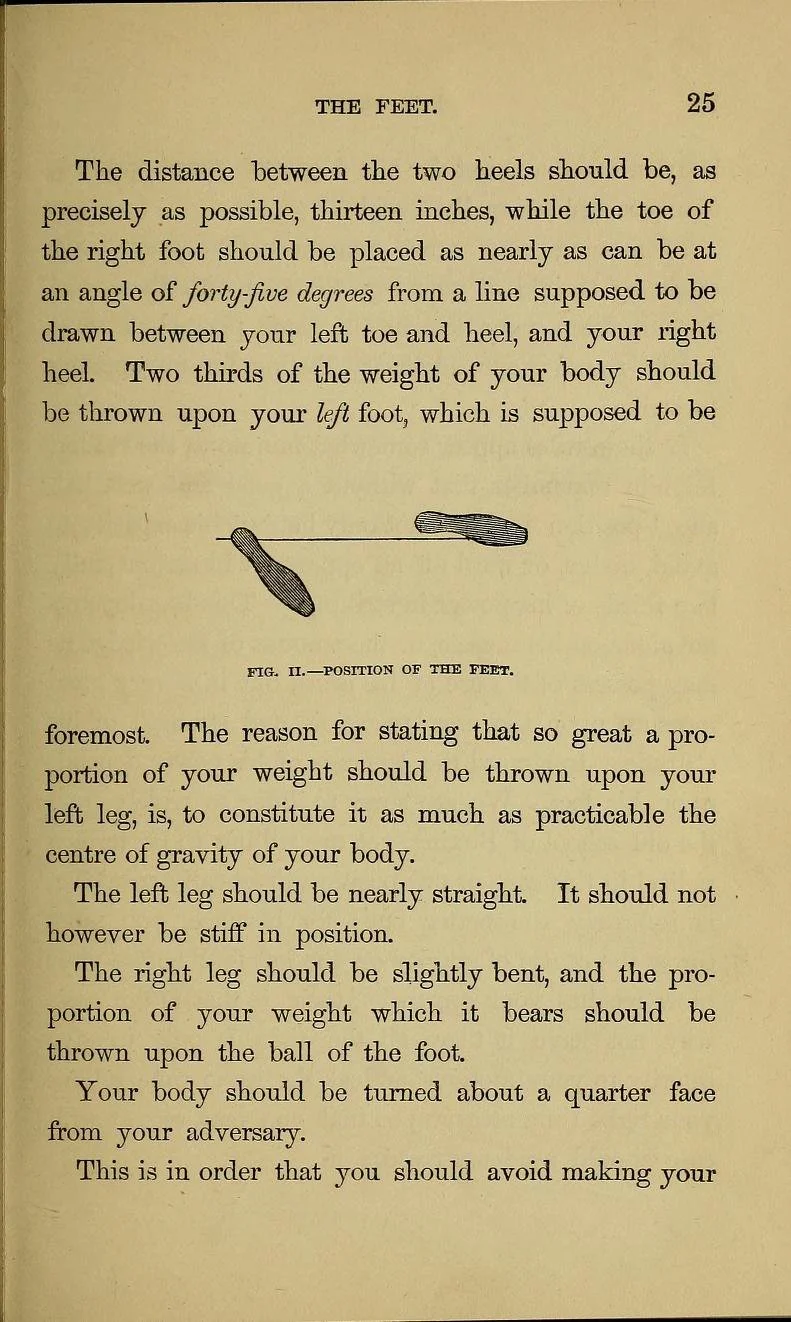
The Science of Self Defence (1867) by Edmund E. Price, via Library of Congress, Public Domain.