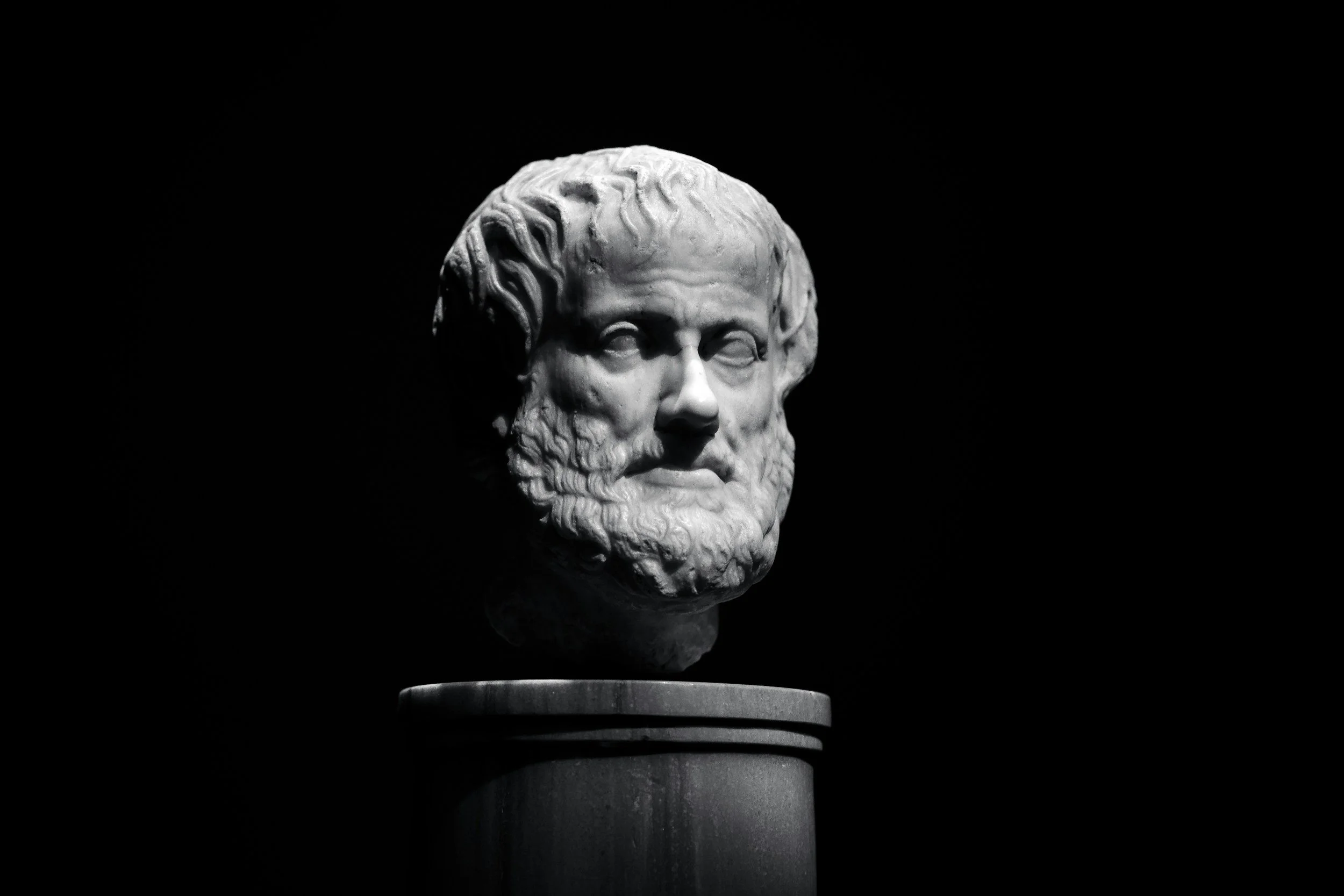
Most people view philosophy as a dusty relic of the lecture hall. They see it as a collection of abstract theories that have no bearing on the hard, binary reality of artificial intelligence. If we wish to navigate the coming decades, we must realise that philosophy is not a theoretical luxury but the most practical tool in our kit. This essay examines whether philosophy remains an academic hobby or becomes the primary engine for safe and effective technology. I will argue that our technical progress relies entirely on our ability to solve philosophical problems. What many dismiss as ivory tower speculation is actually the foundation of all software logic. I argue that philosophy is the most practical discipline for the future of AI because every line of code rests on unexamined metaphysical and ethical assumptions.

The word philosophy carries a heavy burden of perceived uselessness. In this context, it does not mean the study of history's famous thinkers for the sake of trivia. I use it to mean the rigorous application of logic, ethics, and epistemology to solve problems. It is the practice of questioning our definitions to ensure they align with reality.
Engineers often believe they are building neutral tools. They work with data, weights, and biases to create systems that predict human behaviour. However, an algorithm cannot define fairness or justice on its own. It requires a human to translate these abstract concepts into mathematical constraints. When we ask an AI to be "fair," we are making a philosophical choice about which definition of justice to apply. If the developer has not studied the ethics of distribution, the code will likely cause harm. This demonstrates that technical skill without philosophical grounding is like a ship without a rudder.
One might argue that AI development is purely a matter of computational power. From a certain perspective, it may be argued that more data and better hardware will eventually solve these social issues. Proponents of this view suggest that "emergent properties" will lead the machines to find their own moral equilibrium.
This view fails because it ignores the "Garbage In, Garbage Out" principle of logic. Data is never neutral; it is a record of past human choices. If we feed an AI biased data, it will not discover a new moral truth. It will simply automate and scale those existing biases. We cannot outsource our conscience to a machine that lacks a concept of the "good." Therefore, the human must remain the moral architect.
One may counter that philosophy is too slow for the fast pace of Silicon Valley. It is true that philosophers spend years debating single definitions. However, the cost of moving fast and breaking things is much higher when the things we break are our social structures. A few months of rigorous ethical design saves years of legal and social repair. We do not ignore the laws of physics when building a bridge; we should not ignore the laws of logic when building an intelligence.
I have shown that every technical decision in AI is, at its core, a philosophical one. We must stop treating these fields as separate worlds. Those who master the "why" will be the only ones capable of safely directing the "how."