The Fencer’s Fist: How the Art of the Blade Invented Modern Boxing
When we watch a modern boxer snap a lightning-fast jab or pivot on a lead foot, we aren't just watching a punch. We are watching a centuries-old ghost: the smallsword.
While many view boxing as a primitive brawl that slowly became civilized, the truth is far more surgical. The "Science" in the Sweet Science didn't come from the street; it came from the fencing schools of 18th-century London.

1. The Sword in the Fist
In the early 1700s, the "Masters of Defence" in England didn't just teach boxing—they taught a "complete" system of combat including the backsword, cudgel, and smallsword. The most famous of these was James Figg, the first recognized British champion.
Figg was, first and foremost, a fencing master. When he entered the prize ring, he brought a revolutionary concept to fisticuffs: The Straight Line.
The Geometry of the Jab
Before fencing’s influence, "prizefighters" often threw wide, looping blows (the "haymaker"). Fencers knew better. They understood that the shortest distance between two points is a straight line.
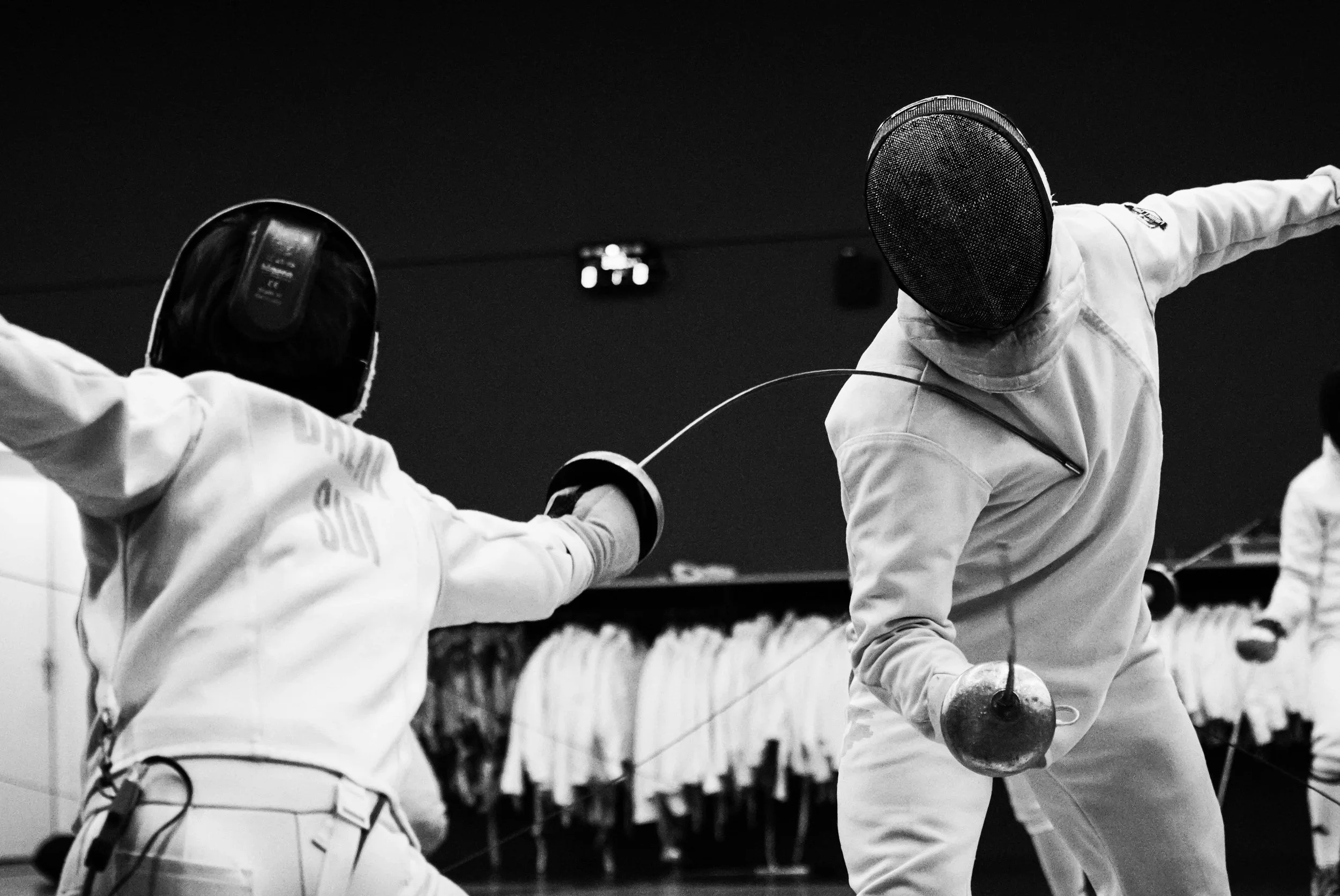
The Fencing Lunge: A rapid extension of the sword arm coupled with a forward step.
The Boxing Jab: A direct translation of that lunge, using the lead hand to control distance and "blind" the opponent.
2. Thinking in "Tempi" (Timing)
One of the most profound influences fencing had on boxing was the concept of Tempo. In fencing, "Time" isn't a clock; it’s an opportunity.
Modern boxers use three specific fencing concepts every time they step into the ring:
The Parry & Riposte: Deflecting a blade (or glove) and immediately returning fire.
The Feint: Drawing a reaction from the opponent to open a "line" of attack.
The Stop-Hit: Hitting the opponent exactly when they are beginning their own attack, a core principle of the legendary Bruce Lee’s "Jeet Kune Do," which was also heavily influenced by fencing.
3. The Great Transition: From Wrestling to Fencing
If fencing provided the technique, the Queensberry Rules (1867) provided the environment.
In the old "Bare-Knuckle" days, wrestling was legal. Boxers stood "square" to prevent being tackled. But when the rules moved toward gloves and banned grappling, the stance changed. Boxers turned sideways, leading with one shoulder, exactly like a duellist. This narrowed the target and increased the reach of the lead hand.
The Verdict: Is Boxing Just "Fencing with Fists"?
While boxing still requires the grit and durability of the ancient prize ring, its intellectual architecture is undeniably aristocratic. Every time a trainer tells a fighter to "work behind the jab," they are echoing the instructions of an 18th-century sword master.
Boxing didn't just evolve from a brawl; it was refined by the blade.