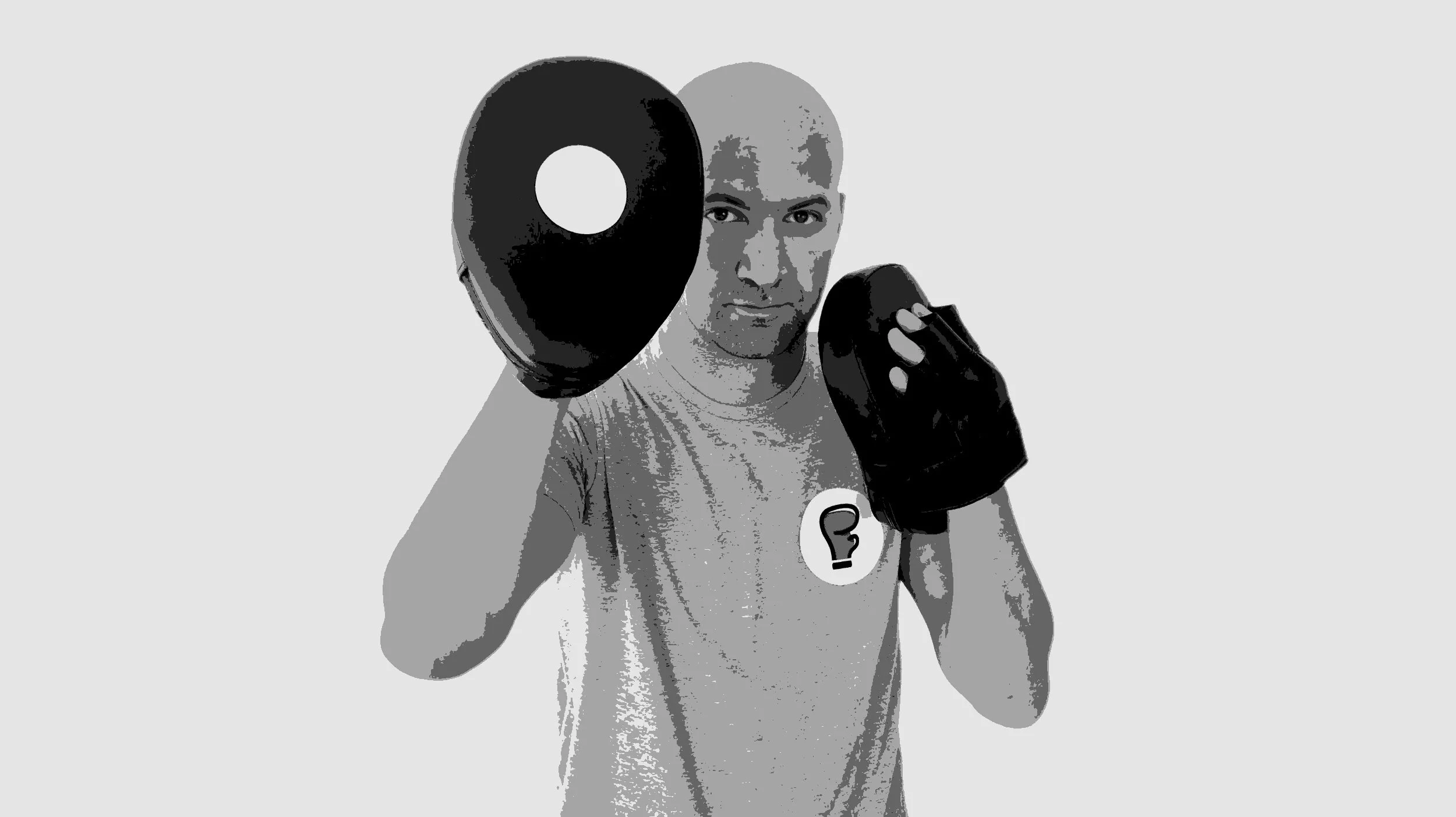
In boxing, the pads are a place of truth. But as boxing coaches, we sometimes encounter clients who aren't looking for the truth, they are looking for a platform for their own ego. Whether you call it "dark triad" or whatever, the result is the same: the technical quality of the session drops, safety is compromised, and the coach-client relationship becomes a power struggle.
The solution isn't aggression; it is detachment.

The Foundation: Skin in the Game
Before you can manage a difficult personality, you need a foundation of real ring time. This isn’t about being a “champion”; it’s about knowing your capabilities and what a real threat looks like.
A coach without their “battle scars” will feel an "imposter syndrome" that makes them susceptible to charm and intimidation. Real experience allows you to stay grounded and remain unfazed by a client's "performance."
The Three Dark Personalities on the Pads
The Narcissist
The Behaviour: They are more interested in flashy combinations than whether the rear hand is in the correct place during a jab. They nod at the verbal instructions from the coach but never implement them. They want a highlight reel, not a lesson.
The Reality: They are using the coach as a tool for their vanity.
The Machiavellian
The Behaviour: They try to "buddy up" to the coach, looking for peer status to bypass the coach’s authority. They "chit chat" to bait the coach into sharing "secret" techniques. They may adopt a “good student” persona. They may even watch like a hawk if the coach decides to hit the heavy bag outside of a session.
The Reality: They are trying to rob the coach of their value.
The Psychopath
The Behaviour: They have a total disregard for the "contract" of padwork. The coach may give instructions, but must be prepared for the unexpected. Punches may be thrown without command, with the excuse of "Hey, this is boxing." This client casually tells the coach how to do their job.
The Reality: They are testing for dominance and disregarding the coach’s physical safety. They are not interested in listening as much as applying their own ideas in the pursuit of power.
A Word of Caution: From Diagnosis to Management
While the Dark Triad is a powerful map, it carries a significant risk: the labelling trap. If the coach starts seeing "monsters" in every client, they lose their professional objectivity. Sometimes a client is just "clumsy" or "excited".
Don’t play psychologist; play professional. Translate character traits into performance metrics. This keeps you detached:
From "He's a Narcissist" to "There is a need for more precise feedback; I will redirect focus to technique."
From "He's Manipulative" to "The rest periods are extending; I will enforce 60-second intervals."
From "He's a Psychopath" to "There is danger of an accident; I will enforce strict 'stop' commands."
This detachment isn't just about the client's health, it's about the coach's longevity. Emotional exhaustion is the fastest way to burn out in the boxing/fitness industry.
A Tip: The "Boring Basics"
While psychologists try to figure out a “solution” to the Dark Triad personality, one tip for boxing coaches might be to focus on the basics:
No Flash: Spend the entire session on the jab and cross.
No Secrets: Ignore any “chit chat” and again focus on teaching the jab and cross, the only “secret” techniques available. Once the session is over, politely move on to the next client.
No Danger: Again, focus on the jab and cross. If they persistently ignore instructions and add moves of their own without command, drop the pads and set a boundary: "I need you to follow my instructions. If you cannot follow my instructions, I will stop the session." If the boundary is crossed, and there is a safety problem, stop the session.
A good student sees value in 100 perfect jabs with feedback from a coach. Professional fighters drill basics every day. An ego-driven client sees basic techniques as an insult. This creates a natural "self-sorting" mechanism for the coach.
The “Boring Basics” is a similar method to what psychologists call “Grey Rocking”, which is to deliberately act as dull and unresponsive as possible to disengage from manipulative, emotionally toxic people. The difference is that “Boring Basics” provides coaches with a diagnostic tool that is also a pedagogical one. It forces the client to choose: either they submit to the craft, or they reveal that their priority is something other than boxing.
The Effect of Exposure: When the "Solution" Becomes the "Game"
The coach must be prepared for the fact that a Dark Triad personality will not see the "Boring Basics" method as a reason to stop, but as a new problem to be solved:
The Narcissist may perform "humility" with the same theatrical ego they used for flashy combinations.
The Machiavellian may become the most "obedient" student.
The Psychopath may presume that the coach has “malfunctioned” and try to “solve the problem”.
It will not last, and no matter how long they endure, the coach can never prescribe the basics enough. Additionally, the purpose of the method is not to "fix" the personality, but to prevent exploitation. If the client attempts to "game" the coach, they have failed the test.
Final Thought
Padwork is a psychological exchange. When one person breaks the "contract" of that exchange, it becomes draining and unnecessarily dangerous for the coach. As coaches, our job isn't to feed a client’s ego. By drilling the basics, grounded in real experience, you ensure that you are coaching the coachable, and the coach-worthy.