The Blog


Fix Your Form: Quick Tips on The Rear Hook
The rear hook offers massive power, but it is the easiest punch to over-swing and lose your balance. Learn how to stabilize your lead leg and tighten your rotation to deliver a devastating punch without leaving yourself open.
Stop Wasting Energy: Why the 'Perfect' Boxing Stance You Learned Isn't Actually About Balance
The common assumption that the boxing stance is a fixed position for simple balance is incorrect, as it's actually a dynamic, ready-to-go system built for transferring kinetic energy and concealing your intentions. By focusing on 'loading' your power instead of 'bracing' for stability, you can immediately gain significant speed and power advantages.

Why Your Favourite Fighting Game is the Best Padwork Coach You Never Knew You Had
The common ground between boxing padwork and fighting games shows that both operate on similar principles. By applying the logic of fighting games to boxing combinations, and by applying the fluidity and improvisation of boxing to fighting games, both can achieve a significant upgrade.

Don't Let Instinct Fool You: Why The Conventional Stance Is The True Power Position for the Cross
The common desire to place the dominant 'power' hand forward in a boxing stance is mechanically flawed. The conventional stance, holding the dominant hand in the rear, is necessary to unlock the superior rotational force of the body for the most powerful cross.

Fix Your Form: Quick Tips on The Lead Hook
The lead hook is one of the most devastating punches in boxing, but many fighters sacrifice power and safety by swinging too wide. Master the "short" hook by using your core and hips to drive the punch instead of your shoulder.

Why You Must Lead With Your Weak Hand to Punch With Real Power
The traditional boxing stance demands the dominant hand be placed in the rear, denying the beginner's natural instinct to lead with their strongest hand. This is the crucial design feature that ensures the dominant hand can leverage the full kinetic chain of hip rotation, converting a simple punch into a fight-ending blow.

How The Best Boxers Use The Cross To Control The Fight, Not Just End It
The common perception that the boxing cross is only a maximal-force knockout punch is a limiting oversimplification. Its true strategic value is found in its neglected roles as a Timing Cross and a Controlling Cross, functioning to interrupt or control the opponent respectively.

The Truth About Unconventional Boxing: Is It Art or Sloppiness?
The conflict between boxing purists and unconventional fighters is a debate over technical consistency versus adaptive effectiveness. Successful unconventional styles rarely disregard the basics entirely; instead, they represent creative evolutions tailored to individual strengths, proving that victory is the only essential criterion for judging a technique.

Fix Your Form: Quick Tips on The Cross
The cross is your primary power weapon, but relying on arm strength alone is a recipe for a weak punch and a wide-open guard. Learn how to bridge the gap between your legs and your knuckles to turn your rear hand into a fight-ending strike.
The Boxing Jab: Why Simply Sticking it Out Won't Win the Fight
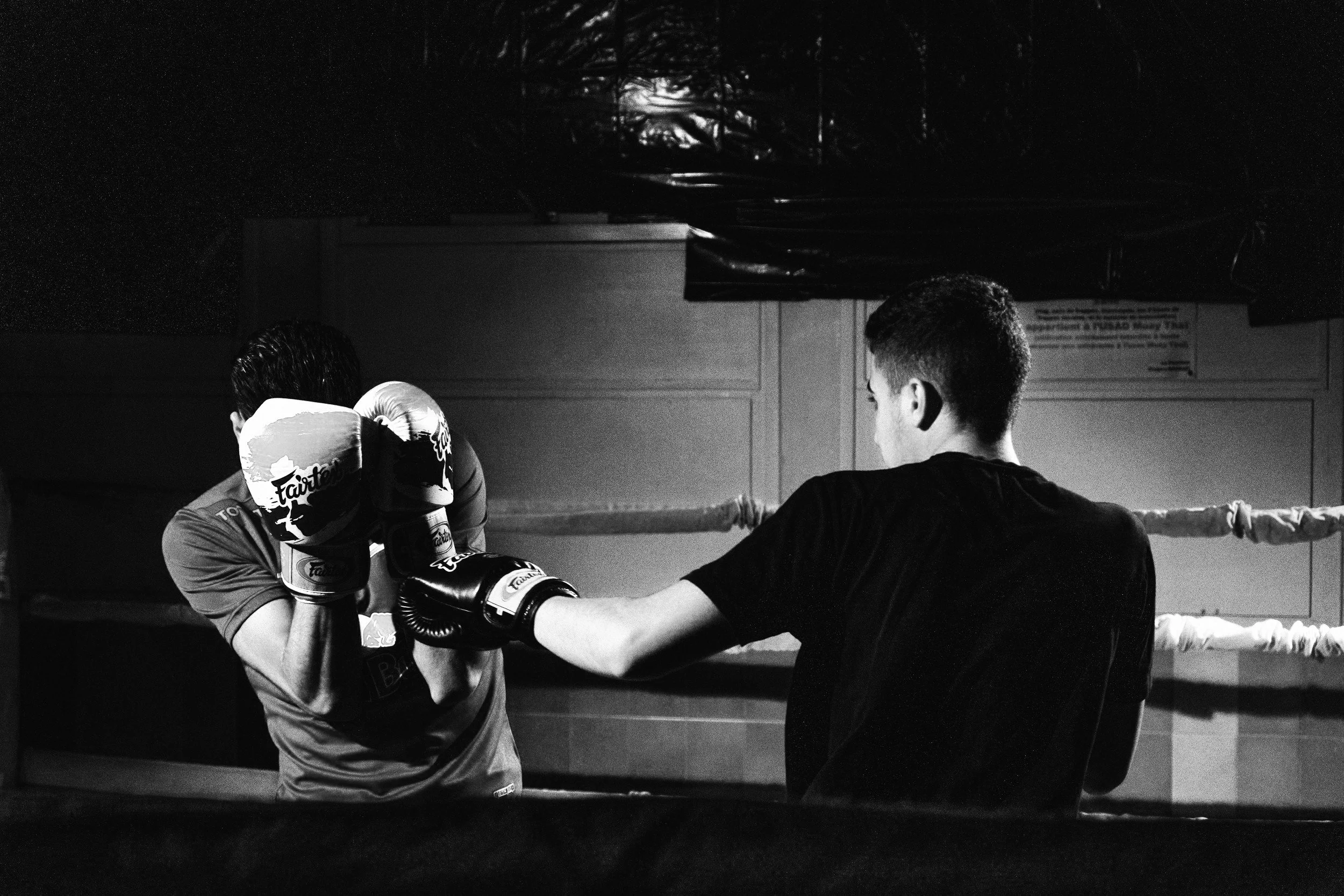
The boxing jab is not merely a high-volume scoring punch, but the primary strategic initiator used to control distance, timing, and an opponent's predictable defensive reactions. Unlocking the jab's true utility lies in its capacity to dictate the opponent's next move rather than simply landing for a point.

How the Finest Boxers Solve a Complex Problem in Three Minutes
Boxing is primarily a challenge of high-speed critical thinking, where a fighter must constantly gather information, test hypotheses, and adapt strategy against a dynamic human problem. This focused mental discipline, involving observation, logical inference, and execution under immense pressure, is what defines true mastery of the sport.

10 Mistakes Recreational Boxers Make On Their First Session
New recreational boxers often burn out quickly by going too hard, while common technical errors include dropping the hands and failing to use full body rotation when punching. Focus on precise form, proper breathing, and maintaining a stable stance to build a solid foundation in the sport.
The Limits of Theory: Why You Must Feel a Punch to Understand the Coach
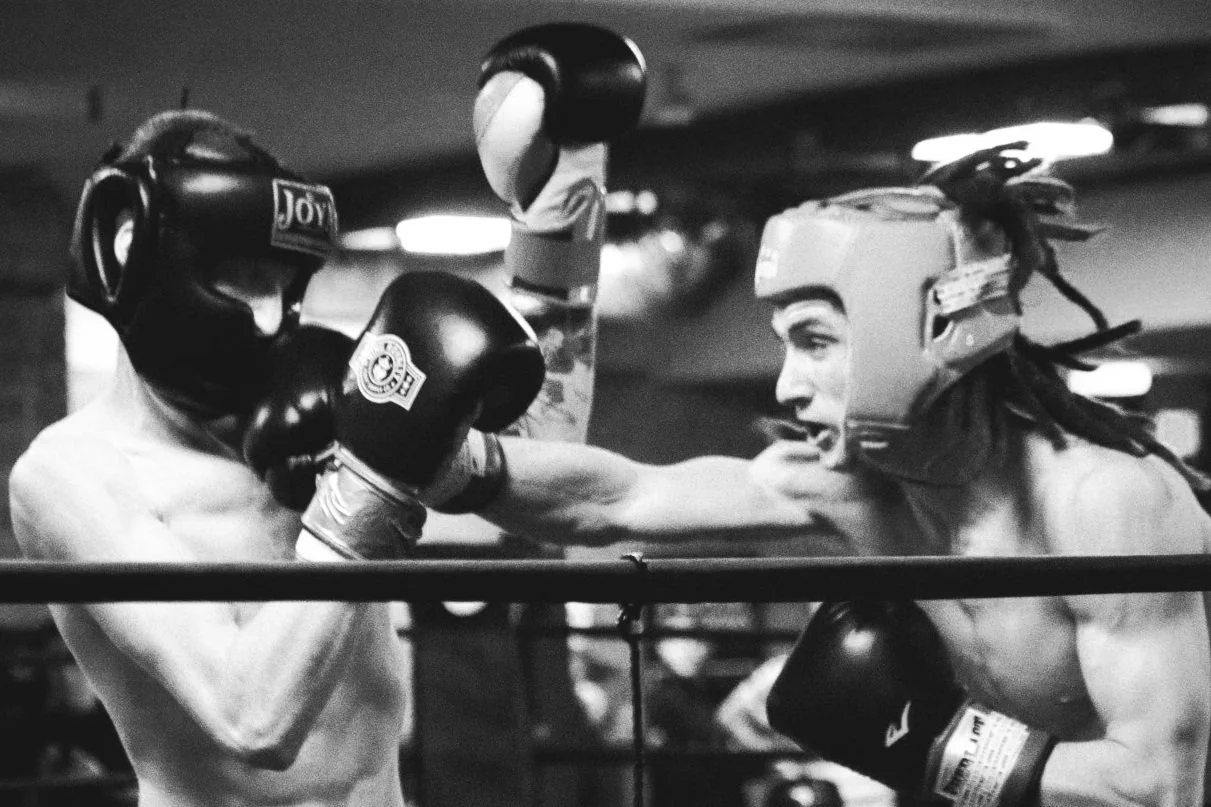
To master boxing, you must go through the physical trial of sparring rather than just talking about it with your padwork instructor. Think of padwork as learning the alphabet and sparring as writing the novel; you only truly learn to box when you experience the impact of a live story. This pressure grounds the coach's advice and translates it into something you can reliably understand.

The Unexamined Fight Is Not Worth Fighting: When a Boxer's Own Mind Becomes Their Toughest Opponent
To enter the ring with unexamined assumptions is to fight a ghost, reacting to a memory rather than the reality unfolding before your eyes. In the sweet science, that half-second delay between what you expect and what actually happens is exactly where knockouts live.
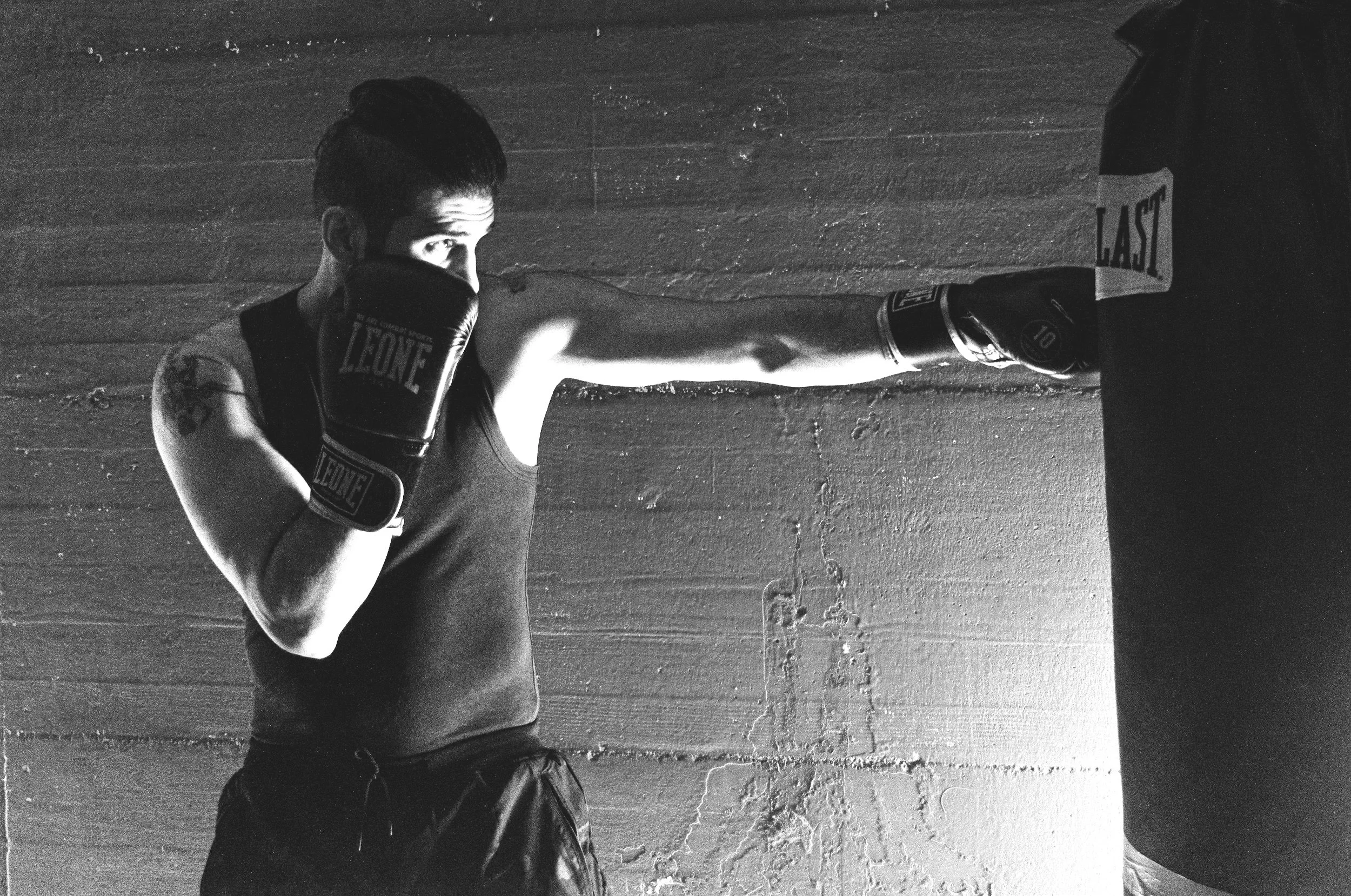
Fix Your Form: Quick Tips on The Jab
The jab is far more than a range-finder; it is the key that unlocks opportunities and dictates the pace of the fight. Stop letting technical leaks like elbow flaring and lazy retractions compromise your lead hand and start mastering the mechanics required to dominate the ring.

Are You Functionally Fixed on Your Punch Bag?
Functional fixedness is a common cognitive bias that prevents us from seeing alternative, unconventional uses for everyday items, causing a mental block during creative problem-solving. By consciously challenging the fixed function of gym equipment, such as using the heavy bag for footwork or the speed bag for distance control, athletes can overcome this limitation and unlock new levels of skill and tactical development.

The Shadowboxer's Struggle: Common Problems & How to Fix Them
Shadowboxing often fails due to common pitfalls like feeling awkward, using sloppy form without a target, and neglecting movement; however, these issues can be fixed by implementing strategic visualisation, using the session for retrieval practice of learned techniques, and strictly monitoring your form in a mirror. By focusing on controlled, themed rounds and avoiding heavy hand weights, you can transform this essential drill into a powerful tool for developing technical precision and muscle memory.

30 Realistic Boxing Combinations Every Beginner Needs to Learn
This expertly curated list distills cluttered "Top 50" boxing guides down to 30 essential, high-quality combinations that focus on pure offense, footwork & defence, and head/body types. By providing this organized blueprint, the guide equips beginners with a manageable, coach-verified foundation to immediately accelerate their training and build flawless muscle memory.

Boxing Timer Videos: 1, 3, 6, and 12 Rounds
Looking for timers to enhance your boxing training? Explore my YouTube boxing timer videos tailored to fit 1, 3, 6, or 12-round workouts. Whether you're sharpening techniques, building endurance, or simulating a championship bout, these timers will keep you on track.

Assessing Boxing Techniques with PUNCH
Master the art of boxing with a systematic approach to assessing techniques. Introducing the PUNCH model – Position, Utility, Nuance, Coordination, and Habituation. Whether you're a boxer striving for excellence or a dedicated trainer, this framework will help you improve your boxing skills.