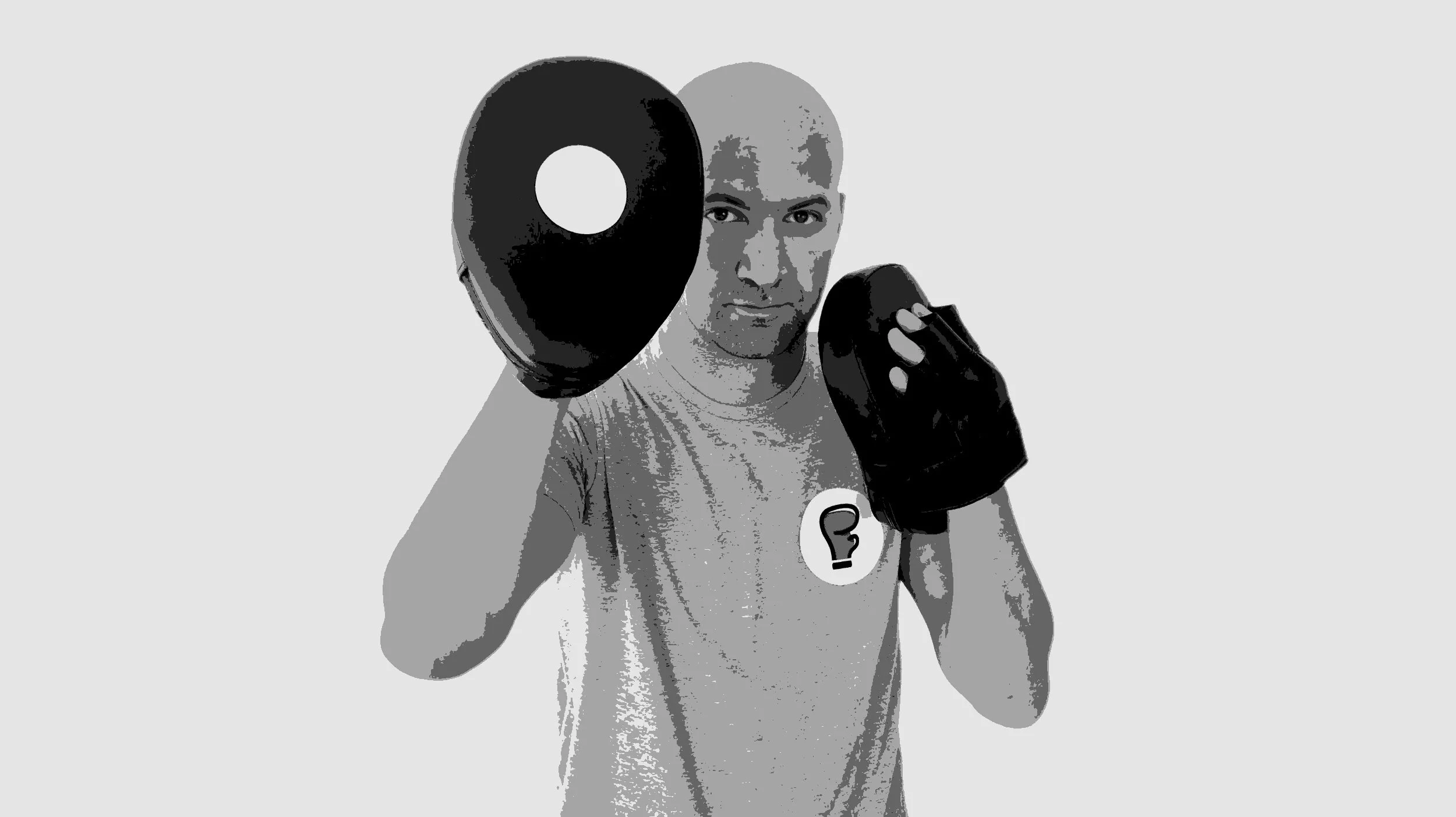
Why You Must Lead With Your Weak Hand to Punch With Real Power
The moment a novice boxer steps into the gym, they instinctively want to stand with their stronger, dominant hand forward. It feels like the most natural way to defend and to strike, since that hand is faster and more precise. However, this is one of the most persistent and significant assumptions boxing coaches have to dismantle. Let’s address a fundamental, confusing question for every beginner: Why does the core, effective boxing stance demand I place my strongest hand in the back, seemingly wasting my primary asset?
The answer is simple, yet counter-intuitive: the Orthodox or Southpaw stance is not designed to maximise the speed of the front punch, but to maximise the rotational power of the rear punch, a feat that is impossible when the dominant hand is leading. This denial of the beginner's assumption, that the best weapon should be placed closest to the target, is the crucial design feature that transforms mere punching into fight-ending power, revealing that what seems like a restriction is the single most efficient way to generate force in a ring.

The Beginner's Assumption: A Case for Intuition
The prevailing, taken-for-granted assumption is that if one hand is better than the other, it should be deployed first and closest to the threat. For a right-handed person, the right hand (or a left hand for a southpaw) is superior for fine motor skills, rapid reaction, and individual strength. Logically, it should be the "jab" hand.
This is fundamentally where the art of boxing breaks from natural instinct. If you were reaching for an object, the dominant hand would lead. But boxing is not about individual arm strength; it is about converting the body's mass into rotational force.
The Established Knowledge: Roles of the Hands
The established knowledge in coaching is that the hands have distinct roles: the lead hand is for setting up, measuring, and control, while the rear hand is for finishing. Yet, this simple division rarely satisfies the beginner who feels weaker and slower by placing their strongest asset in reserve.
The Functional Truth: The Rear Hand as the Power Engine
The entire structure of the traditional boxing stance is engineered around one core principle: giving the dominant, rear hand the longest possible track to generate maximum force. The awkward body profile is a calculated constraint that forces the body to use its largest muscle groups.
1. The Geometry of the Cross
The primary power punch in boxing, the cross (thrown by the rear hand), is not a pushing motion; it is a violent, controlled rotation.
Distance and Acceleration: Placing the dominant hand in the rear creates the maximum possible distance between the hand's starting point and the target. This extended distance allows for greater acceleration.
Torque Generation: The rear-hand cross is launched by a push-off from the rear foot, a rapid unwinding of the hip, and the final extension of the arm. This kinetic chain acts like a spring, coiling and releasing. Only when the stronger hand is positioned to benefit from this complete, full-body rotation can it deliver the necessary impact.
A Punch is Not a Slap: When a beginner punches with their dominant hand from the front, it is essentially an arm-and-shoulder push, lacking the weight transfer required for a fight-ending blow. The sacrifice of leading with the dominant hand is a trade-off for a massive gain in impact force.
2. The Strategic and Defensive Utility
Placing the strongest weapon behind the lead hand offers two critical advantages that justify the initial awkwardness:
Defence and Protection: The rear hand is the primary defensive tool for blocking incoming attacks to the head and body. By keeping the dominant hand back, we ensure it is protected and always available for both defence and the knockout counter-punch. It is a concealed threat.
Masking the Power: An opponent cannot commit fully if they are constantly wary of the power-generating hand. By using the non-dominant lead hand (the jab) to keep distance and confuse the opponent, the rear hand is reserved to exploit the openings the lead hand creates.
This is why resolving the question matters: it reassures the new boxer that they are not stifling their power; they are simply learning the architecture of efficient power transference.
Answering the Objections: "But I Need My Strong Hand Up Front"
The core objection can still persist: "The lead hand feels weak and I can’t hit hard enough to gain respect."
The function of the lead hand is not to inflict maximal damage, but to control the fight's tempo, establish distance, and interrupt the opponent's rhythm. The jab thrown with the non-dominant hand is a conrolling tool, not a finishing tool. The body's commitment to the rear hand is what provides the necessary respect. The true measure of a boxer's strength is not how hard the jab is, but how effectively the jab sets up the rear-hand cross, which is the weapon built for power. Dedication to the technique improves the jab's speed and defensive utility, and in turn, maximises the effectiveness of the dominant rear hand.
Another objection: "If I put my dominant hand in the back, my opponent will know exactly where my power is."
A boxer cannot “hide” the fact that they will punch the opponent. This is boxing. The art of the stance is about efficiency under duress. Placing the dominant hand in the rear allows the body to default to the single most biomechanically advantageous position for striking and defence when fatigued or pressured. It becomes the reliable anchor. The strict technique ensures that when the fight inevitably degrades into a messy exchange, the boxer still has access to their maximum power potential by relying on learned rotational muscle memory rather than instinctive, but inefficient, arm-punching.
Exceptions to the Rule: When the Dominant Hand Appears to Lead
While the rule is clear that the dominant hand must anchor the rear position to maximise rotational power, boxing history offers subtle, tactical exceptions that seem to violate this principle. Crucially, these are not outright rejections of the core stance, but strategic adjustments used by elite athletes for specific purposes, and only work because the boxer has first mastered the standard stance.
The Defensive Adaptation: The Square Stance
In unconventional styles, famously exemplified by boxers like Mike Tyson, the fighter may adopt a stance that appears much squarer, reducing the staggering of the feet and bringing the lead shoulder slightly back. While the body seems more squared, the dominant hand remains firmly in the rear. Its position is dropped slightly, tucked against the body, and it remains ready to fire the cross.
This exception demonstrates that the fundamental rule of placing the dominant hand in the rear is a baseline for power and defence. Any deviation, such as the Square Stance, is a highly refined tactical choice that relies on the opponent's reaction and requires absolute mastery of the basics to avoid major vulnerability. They are advanced strategies, not suitable for the beginner seeking to establish a reliable foundation.
Conclusion: The Gift of Correct Tension
The requirement to lead with the non-dominant hand is the genius of the boxing stance. It forces the body to abandon its quick, but weak, instincts in favour of a system designed to weaponize the core and hips. What seems like a confusing constraint is, in fact, the essential path to unlocking your highest potential. When the fundamentals become automatic, the dominant hand resting on the rear side becomes a promise of latent power, revealing that mastery is achieved by mastering the technically superior, counter-intuitive design.