The Blog

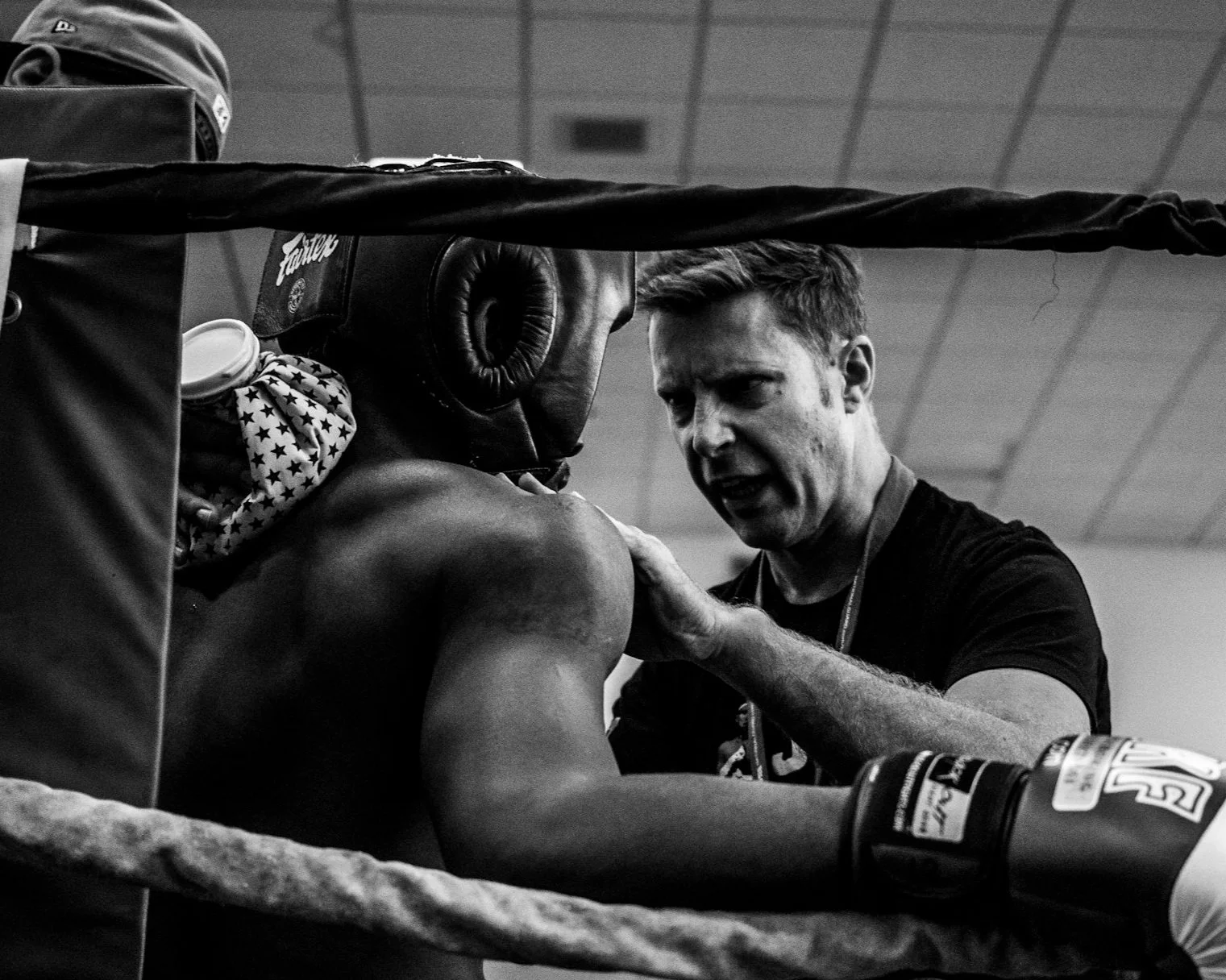
The 60-Second Edge: How Strategic Relaxation Can Win Fights Between Rounds
Use "Strategic Breathing" to transform your sixty-second rest from a frantic panic into a high-performance tactical reset. By strategically calming down and clearing your mind, you can step back into the ring with the physical stamina and focus needed to outlast your opponent.

Why Beginners Gas Out: The Breathing Mistakes That Ruin Boxers
Mastering the sharp exhale is the secret to maintaining explosive power and elite stamina throughout a gruelling twelve-round fight. By synchronising your breath with your strikes, you transform your torso into an adaptive shield that protects your organs and maximises every ounce of force behind your punch.

Why a Mobile Boxing Coach is the Smartest Investment for the Time-Poor Professional
The belief that high-calibre boxing training demands sacrificing hours to a gym commute is fundamentally flawed. Choosing a mobile boxing fitness coach is a strategic investment that maximises time efficiency, delivering expert, tailored instruction right to your doorstep to ensure consistent, results-driven progress.

The Jab vs. The Cross: Mastering Boxing’s Two Most Vital Weapons
The jab acts as your tactical radar, constantly "pinging" your opponent to measure distance and disrupt their rhythm without overcommitting. Once your lead hand has located a gap in the defences, the cross follows as the cannon, delivering maximum power through a full-body pivot.

Beyond the Jab: The Hidden Art of Deception in Boxing
Mastery in boxing isn't just about the strength of the blow, but the sophisticated architecture of the "lie" that sets it up. True champions treat the ring as a psychological laboratory, using subtle feints and broken rhythms to dismantle an opponent's perception before ever landing a glove.

Beyond the Ring: Why Your Favourite Boxer Might Be Taking Ballet Lessons (and Why it Matters)
While traditionalists argue that boxing mastery only happens on the heavy bag, elite fighters are increasingly stepping onto the dance floor to unlock superior balance and unpredictable movement. By mastering the rhythmic discipline of dance, a boxer can transform their footwork into a strategic weapon that is as difficult to time as it is to defend.

The Secret to Being Creative in Boxing: Just Do the Basics
By slowing your basic movements down to a crawl, you move beyond simple muscle memory and begin to notice the hidden angles and subtle shifts hidden within your technique. This intentional boredom allows you to stop merely repeating the basics and start exploring new, creative ways to use them that your opponent will never see coming.

3 Essential Tips for Masterful Boxing Combinations
To master the "sweet science," you must move beyond throwing single shots and focus on the speed, fluidity, and varied levels of your sequences. By prioritising the snap of your punches and incorporating defensive head movement, you can transform a simple flurry into a sophisticated and effective boxing combination.

Real Skills, Virtual Opponent: How to Master Virtual Sparring
Virtual sparring is a brilliant way to sharpen your reflexes against a moving opponent, but without the physical threat of a counter-punch, it is easy to become technically lazy. This guide explains how to maintain your discipline, manage your distance, and treat the screen as a genuine threat so your skills actually translate to the real world.

Heavy Bag Basics: 3 Essential Drills to Stop "Swinging" and Start Boxing
Stop hitting the heavy bag without a plan and start training with purpose. These three fundamental drills will help you master distance, movement, and endurance so you can build a rock-solid boxing foundation.

The Silent Architect: Why Great Technique Alone Won't Win the Fight
Technique provides the mechanical "how" by perfecting the form and efficiency of your movements, while tactics provide the strategic "why" by determining when and where to apply those skills against an opponent. A fighter without technique is a strategist with no weapons, but a fighter without tactics is merely a machine punching air with no direction.

Knockout Ready: How to Prep Your Home for a Boxing Fitness Session
To maximize your session, clear space to allow for safe footwork and have your hand wraps on before the trainer arrives. Ensure the room is well-ventilated and your water is placed at waist height so you can stay focused on the mitts rather than the furniture.

Fix Your Form: Quick Tips on The Rear Uppercut
The rear uppercut is a devastating power shot, but swinging it like a bowling ball leaves you wide open for a counter-knockout. Learn to use your rear hip and a tight vertical path to turn this telegraphed swing into a sharp, explosive "hidden" strike.

Win the Feet, Win the Fight: 3 Tips for Better Boxing Footwork
Mastering the fundamentals of movement is the quickest way to improve your defensive skills and increase your punching power. These three essential tips will help you maintain your balance, stay light on your feet, and create winning angles in the ring.

The Arc of Control: A Tactical Guide to the Lead Hook
The lead hook is far more than a power shot; it is a tactical tool used to control the ring and exploit an opponent’s blind spots. This guide explains how to adjust your technique based on your position and stance, allowing you to stop chasing your opponent and start dictating the fight.

Fix Your Form: Quick Tips on The Lead Uppercut
The lead uppercut is often ruined by "scooping" the hand low, a mistake that telegraphed the move and leaves you wide open. Learn how to use your legs to drive this vertical strike directly from your guard for a faster, more powerful "hidden" punch.

Why the Boxing Uppercut is a Strategic Set-up Tool
While the uppercut is famous for its knockout potential, its true tactical value is its ability to force an opponent's guard to narrow and expose the temples. Learn how the punch is most effective when used as a vertical set-up to create openings for horizontal finishing blows.

Why Virtual Training Is A Tool For The Elite
Virtual boxing training is a tool for technical maintenance between gym visits rather than an alternative for the casual user. Using digital platforms to fill training gaps prevents the decay of motor skills and rhythm, ensuring a fighter remains sharp every day of the week.

What Your Money Can’t Buy in Boxing
While capitalism suggests every result is a retail item, the ring remains a non-transactional space where you are worth exactly what you have earned and not a penny more. A boxing coach can sell you their time, but they cannot sell you the biological and mental transformation that only occurs through hard work.

The Metronome Method: 3 Ways to Quantify Your Boxing Rhythm
To master boxing rhythm, you must transition from "feeling" the beat to quantifying it through auditory entrainment using a metronome. By forcing your feet and fists to sync with precise beats-per-minute, you transform abstract flow into a disciplined, high-speed laboratory for temporal accuracy.