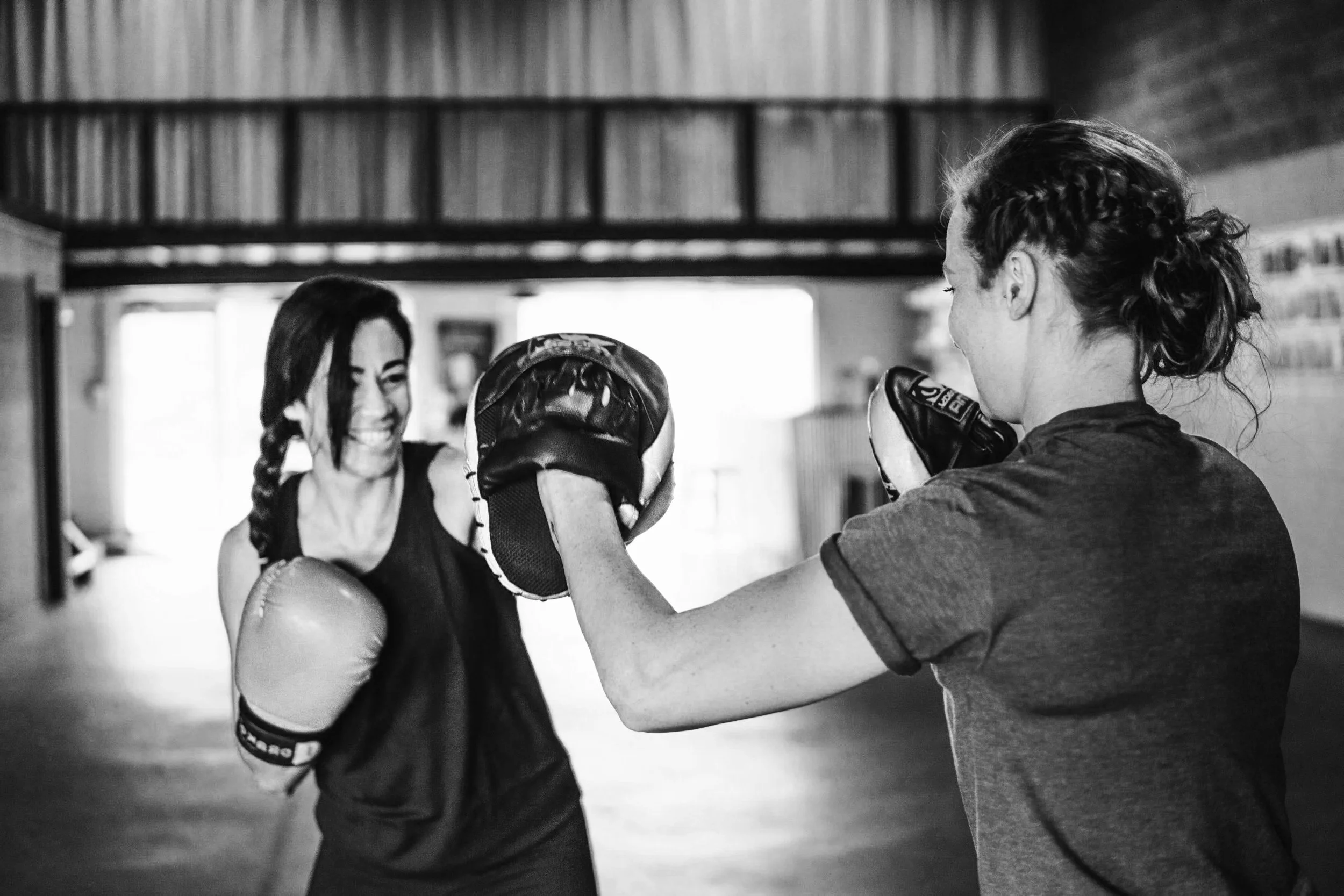
Punching Through Complexity: Why Boxing is a Masterclass in Problem-Solving
You can’t improve in chess by doing more push-ups, and boxing is a game of chess.
Most people think boxing is just about fitness and grit. But at a high level, it is actually about problem-solving. Every time you step into the ring, you are facing a "chain" of problems. If one link in your thinking is weak, the whole system breaks down.
To solve problems better (whether in your job, your life, or the gym), you need to stop acting like a brawler and start thinking like a boxer.
Here is how the technique behind the six fundamental punches provides a perfect metaphor for better problem-solving:

1. The Jab: Probing
The jab is a straight punch with the lead hand. As every boxing coach will tell you, it’s the most important punch in boxing. Why? Simply put: it helps you gather information. Some boxers forget to establish their jab and plan to simply "swing" instead. But everyone has that plan until they get punched in the face.
Boxing Lesson: Before you worry about speed or power, check that you have a good jab first. Otherwise, you’ll likely end up swinging headfirst into the opponent's fist.
Life Lesson: When you are convinced you have a "great idea", remember to ask some basic, fundamental questions before you act on it.
2. The Cross: Leverage
The cross is a straight punch with the rear hand, and is your power punch. But it isn’t about how hard you "try" to hit; it’s about how well you shift your bodyweight. Real power comes from turning your hip, and pivoting your back foot.
Boxing Lesson: If your cross is weak, you are likely failing to turn the hip to get leverage.
Life Lesson: If your “solution” isn’t working, look for the "pivot point", the small change that has the biggest effect.
3. The Lead Hook: Divergent Thinking
The lead hook is a sideways, curved punch with the lead hand. Like the cross, it relies on shifting your weight, only this time from a different angle. The power comes from turning the hip and pivoting on the lead foot.
Boxing Lesson: If your opponent is blocking every straight shot, you need to change trajectory. The lead hook comes from the side, where the opponent isn't looking.
Life Lesson: If your current solution is hitting an obstacle, look for a different path rather than just trying harder.
4. The Rear Hook: Second-Order Thinking
The rear hook is a sideways, curved punch with the rear hand. It’s a big, risky move. Because it has further to travel, it leaves you momentarily exposed. You have to think about what happens after you punch.
Boxing Lesson: Throwing a rear hook leaves a massive gap in your own defence. You have to be certain the risk is worth the reward, and have an exit strategy.
Life Lesson: Good problem-solving means making sure your "solution" today doesn't create massive problems tomorrow. Always ask yourself: "And then what?"
5. The Lead Uppercut: Gap Analysis
The lead uppercut is a vertical, curved punch with the lead hand. It is often used as a counter-punch. A common mistake is to "drop" the hand before lifting it to punch, which creates a huge opening for your opponent. The proper technique is to bend the knees to keep the guard up before you strike.
Boxing Lesson: If the opponent is throwing persistent crosses, between their arms there is often a tiny gap, right up the middle. The lead uppercut is the only tool for the job.
Life Lesson: A great solution can be poorly executed. Find the gaps in the problem, but don’t forget to close the gaps in your solution.
6. The Rear Uppercut: Inevitability Thinking
A rear uppercut is a vertical, curved punch with the rear hand. It is rarely thrown first. In fact, it is one of the most dangerous punches to throw by itself because it requires dropping the guard and has a long distance to travel. To throw it safely, you must set it up. This means to first distract the opponent or manoeuvre them into a strike zone.
Boxing Lesson: You don't just throw a rear uppercut and hope; you create the environment for it to succeed. You use a combination of previous punches to force the opponent into a specific posture where the uppercut becomes inevitable.
Life Lesson: Don't wait for the "perfect moment" to solve a problem. Active problem-solving means taking intentional steps to move the pieces into a position where your solution can finally be delivered.
Conclusion
Boxing is just problem-solving under pressure. The next time you are facing a difficult task, don’t just work harder. Reflect on the following:
The Jab (Probing): What basic, fundamental information am I missing?
The Cross (Leverage): Where is the "pivot point" that will create the most impact?
The Lead Hook (Divergent Thinking): What is the side-angle path I haven’t tried yet?
The Rear Hook (Second-Order Thinking): What new problems will this "solution" create tomorrow?
The Lead Uppercut (Gap Analysis): Where is the gap in the problem, and the gap in my own plan?
The Rear Uppercut (Inevitability Thinking): How can I shift the variables of this situation to make my solution more effective?