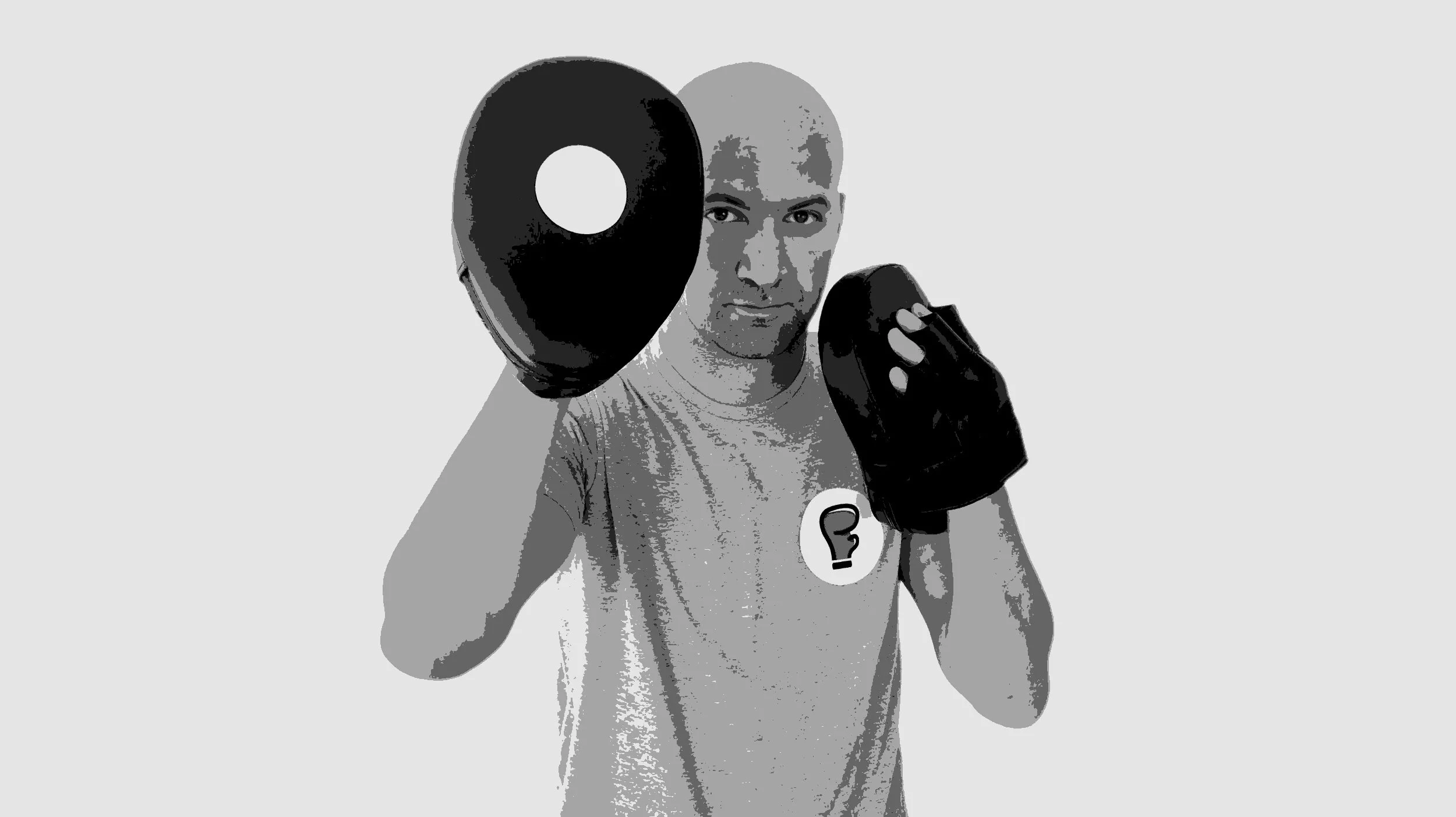
The most effective training methods for winning a professional boxing match can be the primary reason a recreational boxer leaves the gym. The idea that recreational boxers can simply learn professional boxing techniques without ever stepping into a ring creates a complex problem within the community, where the motivations of the four central roles are frequently confused:
the professional boxer (whose career relies on competitive victory)
the professional boxing coach (whose reputation is based on that boxer's win rate)
the recreational boxer (whose goal is personal well-being and skill acquisition)
the recreational boxing coach (whose success depends on student retention and safety)
The current prevailing assumption is that the 'best' advice for the competitive pair should uniformly apply to the recreational pair. However, this creates a conflict: the expectations placed on a recreational boxer are profoundly different from those placed on a professional. My aim here is to clearly define this critical divergence and demonstrate why blindly applying professional coaching standards to recreational boxing leads to frustration. I think the primary metric for a professional coach is win rate and maximum performance, whereas the metric for a recreational boxer's coach should be retention and skill acquisition within a safe, enjoyable framework.

The Prevailing Assumption: One Standard Fits All
The established consensus in combat sports training is based on a hierarchy of excellence: the techniques, regimens, and mindsets that produce champions are considered the gold standard for everyone. The best professional coaches, known for their rigorous demands and zero-compromise approach to performance, are often revered and their methods widely disseminated. This naturally leads to the assumption that if a technique is 'best' for a world-class athlete, it is also the 'best' way for a casual student to learn and progress. The common expectation is that high-level, performance-driven instruction is universally applicable, differing only in intensity, not in kind. This is the assumption I intend to question.
Defining the Fundamental Difference in Metrics
I think that the expectations driving a professional boxing coach and a recreational boxing student are fundamentally opposed, primarily revealed by their ultimate performance metrics.
The professional coach’s purpose is to maximise competitive performance. Their metric is strictly utilitarian: win rate and physical maximisation. Every piece of instruction, every drill, and every demand for physical discomfort is justified by its contribution to a marginal advantage in the ring. When a professional coach insists on perfect execution, it is because a fractional error can mean the difference between victory and defeat, and their livelihood often depends on their fighter’s success. For this coach, the primary currency is compliance and quantifiable results.
Conversely, the recreational boxer’s purpose is driven by personal welfare. Their metric is retention and skill acquisition within a safe, enjoyable framework. The recreational student is paying for a service that must provide physical benefits, stress relief, and a sense of accomplishment without undue risk or misery. If a coach's demands lead to burnout, excessive injury, or a feeling of constant failure, the student simply leaves. The recreational coach's primary currency is sustained engagement and perceived value. My point is this: what is considered 'good' coaching in the professional realm can be 'bad' coaching in the recreational realm because the intended outcome is entirely different.
Why Performance Coaching Can Lead to Recreational Failure
Applying a purely performance-driven coaching style to a recreational audience is a flawed approach because it denies the student's actual motivation, but it also reaches a point of diminishing returns if they refuse to spar.
A professional boxing coach will constantly push a fighter through the fatigue threshold, demanding a volume of training that forces physiological adaptation. While this is essential for competitive advantage, it is often detrimental to someone who has a full-time job and family commitments. The recreational student needs to feel energised after a session. A coach who prioritises the maximum number of rounds over the student's recovery capability is meeting a professional standard but destroying recreational longevity.
Furthermore, the professional focus on perfect form often results in an obsession with micro-corrections that stifle the recreational student's enjoyment and confidence. A world-class coach might spend an entire session correcting a minute flaw in a pivot because, for a professional, that flaw is exploitable. For a recreational boxer, however, the constant negative feedback can feel demoralising; they joined to learn a skill and feel competent, not to be relentlessly exposed to a standard they have no intention of reaching. The coach is correct that the form is 'wrong' by professional standards, but they are wrong in assuming that correcting the fault is more important than ensuring the student returns for the next session.
Crucially, the professional coach's knowledge base includes vital skills that can only be developed through live, competitive feedback: real-time anticipation, managing distance under threat, and pressure absorption. For the recreational boxer who chooses to focus purely on pads and bag work, these elements remain theoretical. The speed and impact awareness gained from defensive drills with a partner, such as slip lines or parry drills, cannot replicate the qualitative pressure of an opponent who is actively trying to hit you. Therefore, the professional coach is limited in how much of their expertise in fighting they can pass on to someone who will not fight. The student needs to understand that their choice to avoid sparring creates a necessary barrier to receiving the full depth of professional-level tactical instruction.
Addressing the Counter-Argument: The 'Best Practices' Fallacy
A common counter-argument is that "perfect practice makes perfect," and that by adhering to professional standards, the recreational boxer learns better habits. The argument suggests that poor form learned early is hard to unlearn, and therefore, uncompromising professional-level correction is necessary for long-term skill development.
This perspective, however, suffers from a false premise: the idea that the only two options are 'uncompromising professional standard' or 'poor habit formation.' This is a false dichotomy. A skilled recreational coach, the one whose metric is retention, will focus on progress, not perfection. They understand that a student will initially execute a technique poorly but that consistent, positive reinforcement of the key biomechanical principles behind the movement is more effective than the relentless correction of every minor error.
For instance, a professional coach might stop a student mid-punch because their back heel lifted too much. A recreational coach, conversely, should first praise the student for generating power and then gently offer a slight adjustment to the heel, framing it as a way to enhance power and balance, not as a major fault. The recreational coach’s method achieves the required technical outcome without the psychological cost of constant failure, ensuring the student is motivated to return and further refine the technique.
Anticipating Objections: Is it 'Watering Down' the Sport?
An opponent might argue that by advocating for a less-than-professional standard, I am effectively suggesting that coaches 'water down' the discipline of boxing, reducing it to mere fitness without the challenge of the art.
My defence is that this confuses tailoring the instruction with reducing the difficulty of the skill itself. The fundamentals of boxing remain the same; a jab is still a jab. What I advocate for is not a change in the technique but a change in the pedagogy and pacing of the instruction. The professional model is a sprint to peak performance, which requires high-volume, high-intensity, and hyper-critical feedback. The recreational model should be a marathon of skill acquisition, which requires consistency, positive reinforcement, and a focus on safety and enjoyment. We are not lowering the bar for the skill; we are adjusting the height of the bar for the student's current goal, ensuring they remain engaged long enough to eventually appreciate the true depth and challenge of the sport.
The conflict of interest between a professional coach’s focus on performance maximisation and a recreational boxer's need for enjoyable, sustainable skill acquisition is a common source of confusion. For a recreational boxer, the coach’s metric must shift from win rate to retention, recognising that what makes a champion coach great can make a recreational coach ineffective.