The AI Workout Fallacy: Why Your Chatbot Isn't Your Next Personal Trainer
In the age of instant information, it's tempting to outsource almost everything to AI, from writing emails to planning your next meal. And with the rise of powerful Large Language Models (LLMs), many are turning to these digital brains for their fitness advice. "Just give me a workout plan for hypertrophy!" you might type, expecting a perfectly tailored, scientifically sound program.
But here's the uncomfortable truth: relying on a chatbot for your workout plan isn't just suboptimal, it can be downright dangerous. The problem isn't the AI’s willingness to help; it's a fundamental misunderstanding of how these AIs actually work, and what that means for your physical well-being.
The "Genius" Illusion: What We Get Wrong
Most people interacting with chatbots make a critical assumption: they believe the AI "understands" the world in a way similar to a human. You might imagine it as:
A Super-Smart Researcher: A tireless academic who has read every textbook, scientific paper, and medical journal on exercise physiology, biomechanics, and nutrition.
A Personal Expert: Someone who can synthesize complex information, apply critical thinking, and possess a nuanced understanding of human anatomy, injury prevention, and individual differences.
A Conscious Entity: An intelligence that genuinely "knows" what a deadlift is, how it stresses the spine, or the difference between a healthy calorie deficit and starvation.
This couldn't be further from the truth.
Forget the idea of a conscious entity or a tireless researcher. An LLM is, at its core, a highly sophisticated word prediction machine.
Pattern Recognition, Not Reading: Chatbots are trained on enormous datasets of text, the internet, books, articles, forums, etc. They don't "read" this text in the human sense; they analyze patterns.
Statistical Relationships: The AI learns the statistical relationships between words and phrases. When you ask it a question, it predicts the most probable sequence of words that would answer that question, based on what it "saw" in its training data.
No Understanding, No Reasoning: This is the crucial part:
It doesn't "understand" exercise physiology. It just knows that when people talk about "hypertrophy," certain words like "reps," "sets," "compound movements," and "progressive overload" tend to appear together.
It doesn't "reason" about safety. It doesn't know that performing a heavy deadlift with improper form can cause serious injury. It only knows that "deadlift" and "proper form" are often associated.
It has no concept of "truth" or "accuracy." Its goal is to generate text that sounds plausible and matches the statistical patterns of its training data. If its training data contains misleading or incorrect fitness advice (and the internet is full of it!), the chatbot will happily reproduce it.
The Dangers of the AI Workout Plan
Armed with this understanding, the risks of using a chatbot as your workout planner become clear:
The "Hallucinated" Workout: A chatbot cannot assess your unique body mechanics, past injuries, current fitness level, or proper form in real-time. It might recommend exercises that are unsuitable or even dangerous for you. Without understanding the principles of exercise science, a chatbot might generate a plan that is incoherent, lacks proper progression, or simply isn't optimized for your goals.
Lack of Context: Your age, gender, training experience, medical conditions, and lifestyle all profoundly impact what constitutes an effective and safe workout. A chatbot is a generalist; it cannot account for your specific nuances.
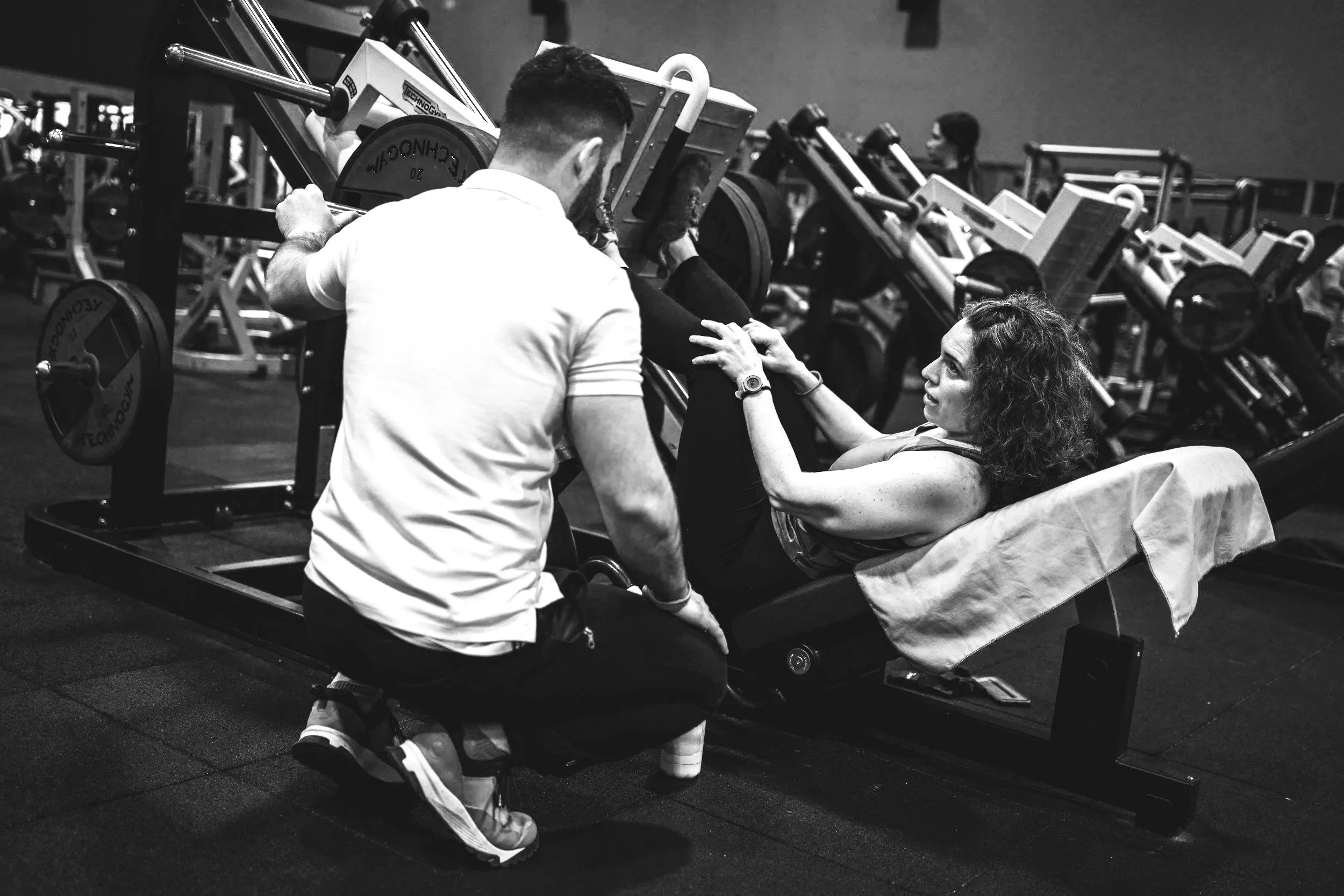
The Feedback Vacuum: A personal trainer watches your knees cave during a squat and tells you to stop. A chatbot tells you to do 10 more reps because the math says so. It has no way to assess your form or your fatigue levels in real-time.
Conclusion: Don't Substitute Algorithms for Expertise
While chatbot are incredible tools for many tasks, your body is not a generic text prompt. Designing a safe and effective workout plan requires genuine understanding, experience, critical thinking, and the ability to adapt to a dynamic, complex biological system: you.
For personalized fitness advice, invest in a qualified human personal trainer, consult certified fitness resources, or use reputable apps designed by exercise professionals. Save the chatbots for writing your grocery list, not your exercise program. Your health is too important to leave to a word-prediction algorithm.