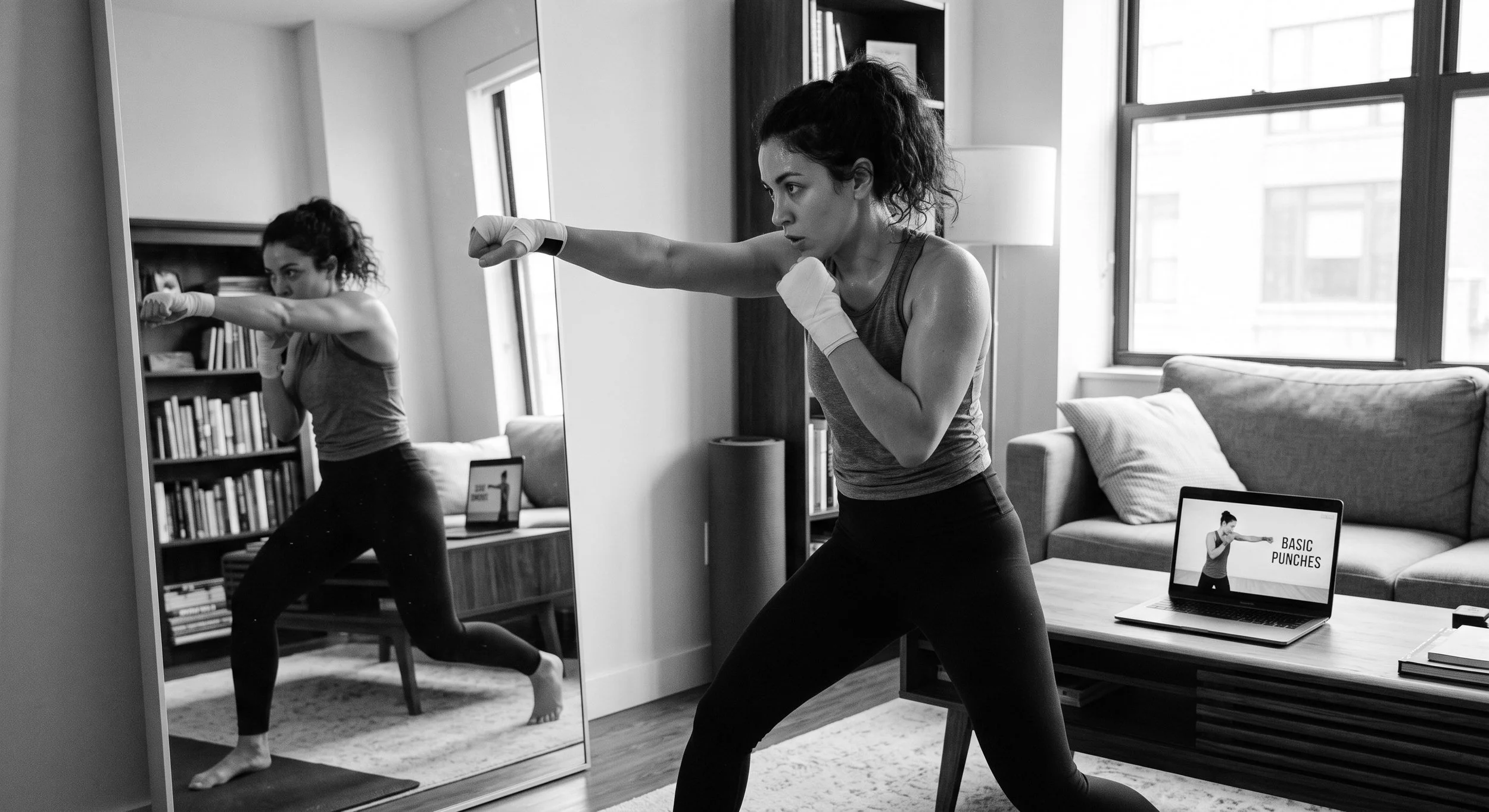
Fix Your Form: Quick Tips on The Lead Uppercut
Most fighters assume that the power for an uppercut comes from "scooping" the arm upward from the waist to the chin. This assumption is a mistake; dropping your hand creates a massive opening for a counter and tells your opponent exactly what is coming. In reality, the lead uppercut is a "short" punch driven entirely by the legs. If your hand moves down before it moves up, you aren't punching, you're telegraphing.

Common Mistakes to Avoid
The Low Scoop: Dropping your lead hand toward your hip to "wind up" the punch. This exposes your entire lead side to a counter-strike.
The Arm Pull: Trying to lift the weight of the punch with your bicep and shoulder rather than exploding upward with your legs.
Leaning Back: Pulling your torso away from the opponent as you throw. This takes the weight out of the punch and leaves you off-balance.
The Over-Extension: Driving the punch too high in the air. If you miss, your hand ends up above your head, leaving your body completely open.
Drills and Solutions
The Dip and Drive: Instead of dropping your hand, drop your lead hip and knee. Lower your level with your legs, then explode upward to provide the power.
The "Inside the Box" Drill: Shadowbox with your back and lead shoulder against a corner or wall. Practice throwing the uppercut vertically. If your hand loops out or drops, you’ll hit the wall.
Short-Range Snap: Focus on moving your hand only 6–10 inches. The punch should travel from your guard directly to the target’s chin.
The Rear Guard Glue: Ensure your rear hand is physically touching your jaw as you throw the lead uppercut. This protects you from the most common counter: the opponent’s hook.
Final Thoughts
The lead uppercut is a "blind spot" punch, it is most effective when the opponent never sees it leaving your chin. By removing the "scoop" and using your legs to drive the shot, you turn a slow, risky move into a sharp, invisible weapon that can change the course of a fight.