
Blog: Musings of a Boxing Fitness Coach

11 Counter-Punch Combinations for Beginners
Counter-punching is a critical skill for beginners to develop, and this list provides 11 combinations that immediately follow a specific defensive manoeuvre to turn defence into offense. These combinations pair basic defensive actions like the Lead Catch, Rear Block, Lead Slip, Rear Roll, or Pull with an immediate punch sequence, such as the basic Cross, Lead Hook, Cross, to train reflexes and timing.

Boxing Training Equipment Checklist
What equipment should beginner boxers bring to training?

The Art of Control: A Comprehensive Guide to the 10 Types of Control in Boxing
Control in boxing is an advanced method of moving that subtly or explicitly influences an opponent's behaviour, with the primary purpose of setting up an attack or a counter-punch. These techniques range from non-contact methods like Distance Control (using footwork) and Stance Control (using feints) to contact-based methods applied to the opponent's body or guard, such as Hand Control, Head Control, and the most basic, Clinch Control.

How to Step and How to Skip
Footwork is the foundation of a boxer's movement, enabling efficient attack, defence, and energy conservation. The step and the skip are two fundamental techniques used to move while maintaining a balanced, ready stance.

How to Pivot
Pivoting is a critical boxing technique used to evade punches, create counterattack angles, and control the ring by turning the body and shifting the feet, which requires excellent balance and body control. Executed from the orthodox stance, the clockwise pivot plants the front foot and circles the rear foot out to change position, while the anti-clockwise pivot circles the rear foot inward, both manoeuvres being essential for repositioning the fighter without becoming flat-footed or exposing the body.

How to Roll
The roll, or bob and weave, is a versatile defensive boxing technique that involves lowering and moving the upper body in a 'U' shape to evade punches and create angles for counterattacks, requiring good footwork, balance, and body control. Learn the difference between the Lead Roll and the Rear Roll, the coaching points being to bend the knees, maintain sight of the opponent, and avoid common errors, like dropping the guard.

A Sample Boxer’s Workout
A sample boxer's workout is structured in five phases, beginning with a Warm-Up (Ropework) and Movement Preparation (Dynamic Stretches and Shadowboxing) to prepare the body for high-intensity work. The Main Workout focuses on developing skill and power through Padwork, Bagwork, and Floorwork (legs, arms, and core exercises), concluding with a Cool Down (Ropework) and Tissue Restoration (Static/Dynamic Stretches) to ensure recovery.

10 Basic Combinations
Practicing basic boxing combinations is crucial for beginners to improve their hand speed, coordination, and punching technique by throwing simple punch sequences in rapid succession. The 10 essential combinations provided, ranging from the Double Jab to the Jab-Cross-Lead Hook, teach foundational concepts like setting up a punch, and striking at appropriate ranges.

How to Slip
The slip is an essential boxing defence that involves subtly and quickly moving the head off the firing line to avoid an incoming punch, requiring fast reflexes and good anticipation. Executed from a proper stance, the Lead Slip and Rear Slip allow a boxer to evade damage and simultaneously create valuable counter-punching opportunities, serving both defensive and offensive purposes.

How to Block
Blocking is a fundamental boxing defence that uses the gloves, arms, and shoulders to deflect or absorb punches, protecting the boxer while also serving as an offensive tactic to disrupt an opponent's rhythm. Essential techniques include the Lead Block, Rear Block, and the Cover, all executed from a proper stance while avoiding common mistakes like reaching out, elbow flaring, or lifting the chin.

How to Wrap Your Hands
Learn how to wrap your hands like a pro with this informative post. Discover the step-by-step process for wrapping your hands before a boxing workout or fight, including how to choose the right hand wraps and how to properly secure them to protect your hands and wrists.

How to Feint
Feinting is a crucial boxing technique used to deceive opponents, setting up powerful combinations or disrupting their defence, and requires quick reflexes and understanding of their tendencies. This post redefines a feint as a punch that deliberately stops short of the target, offering a practical way for boxers, partners, and coaches to safely and effectively train this essential skill on heavy bags and in padwork.

The 6 Basic Punches
The six basic punches are more complex than they appear, requiring precise timing, balance, and footwork to be effective, not just simple execution. A skilled boxer must utilize punches like the Jab to control the opponent, the Cross for maximum power, and the Hook/Uppercut to catch opponents off guard.

How to Shoulder-Roll
The Shoulder-Roll is a key defensive move performed from the specialized Philly Shell stance to deflect straight punches off the lead shoulder and set up a counterattack. What are the basic do’s and don’ts of the shoulder roll?
How to Shadowbox
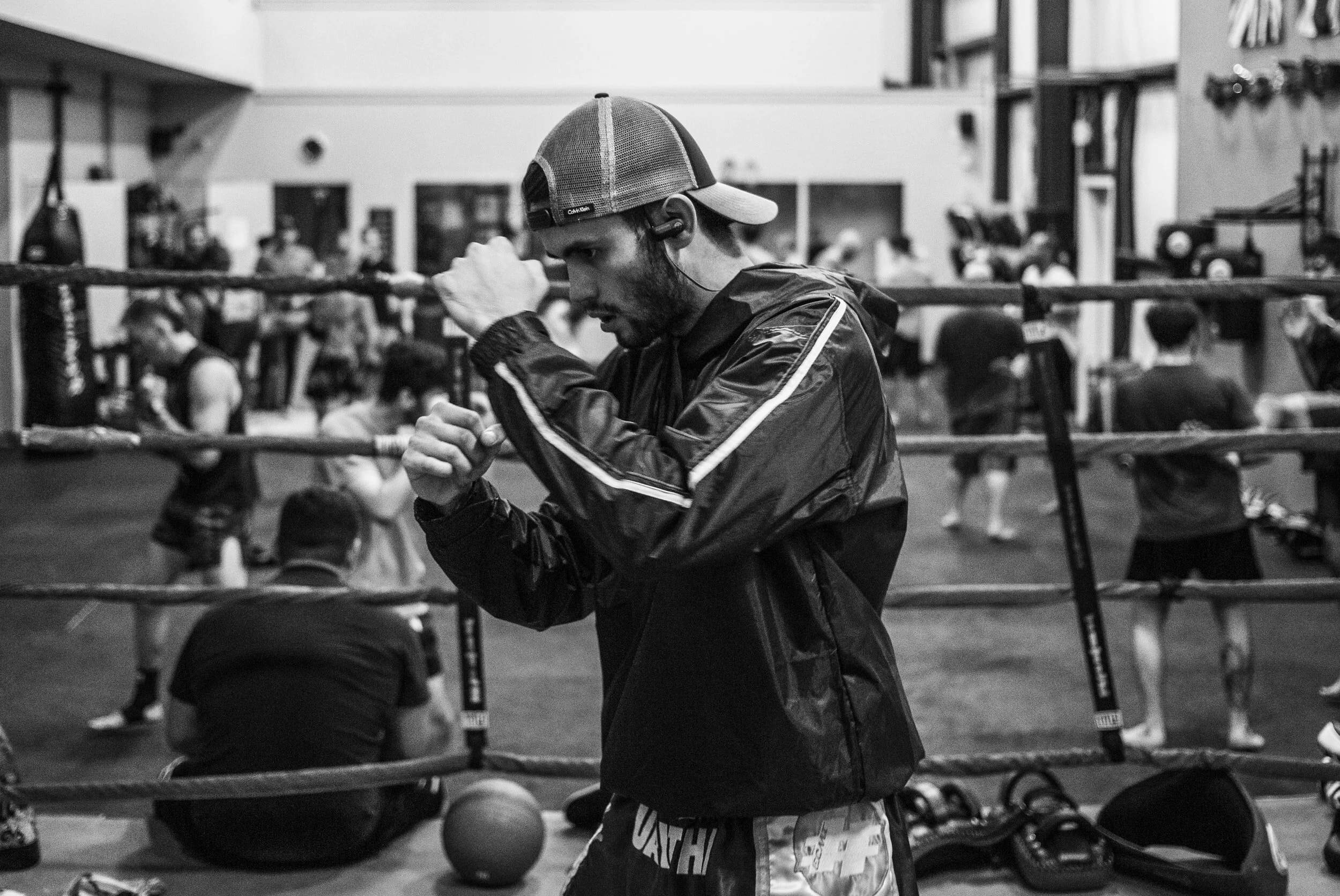
Shadowboxing is a crucial, high-intensity training activity where a boxer visualizes and reacts to an imaginary opponent, serving as an excellent cardio workout and tool for improving technique. To prevent aimless movement and reinforce good habits, boxers must bring purpose to their practice by using techniques like Self-Assessment (filming oneself) and Opponent Assessment (imagining a specific fighter or style).

How to Uppercut
The Uppercut is a powerful, vertical punch thrown in an upwards arc, making it highly effective for catching an opponent off guard, especially a taller one, or serving as a potential finishing blow. To execute this punch, power is generated by rotating the hips and torso while maintaining proper body alignment, which also makes it an excellent exercise for working the core, arms, shoulders, and upper back.

First Time Sparring Guide
What are some tips for boxers doing their first sparring session? Sparring is contact-based training that simulates a real fight, ideally performed with a partner of equal weight and skill, and is supervised by a qualified coach. To prepare for your first session, you should progress from conditional sparring (light contact with specific technical conditions) to full sparring (without extra conditions).

How to Hook
The hook is a powerful, circular punch thrown in a sideways arc that targets the head or body of an opponent. It requires significant hip rotation and works the muscles in the arms, shoulders, and back, making it excellent for improving both skill and overall boxing fitness.

The 3 Stages of Learning
According to the Fitts and Posner Model, learning a new skill involves passing through three distinct stages. Learning begins with the Verbal-Cognitive Stage, where the boxer mentally talks themselves through each step, followed by the Motor Stage, where movements start becoming automatic and the boxer focuses on consistency and mistake detection. Finally, in the Autonomous Stage, the technique is mastered and performed effortlessly, freeing the boxer to develop complex skills and combinations.

Boxing Angles: The Compass and The Clock
To master ring generalship and footwork, a boxer can map the ring's angles using two models: the Compass (dividing the ring into 8 intuitive directions) or the Clock (dividing the ring into 12 specific points). Mapping these angles is crucial for planning movement, such as manoeuvring an opponent into a corner, and brings greater precision to both bagwork and shadowboxing drills.


