Blog: Musings of a Boxing Fitness Coach


How to Feint
Feinting is a crucial boxing technique used to deceive opponents, setting up powerful combinations or disrupting their defence, and requires quick reflexes and understanding of their tendencies. This post redefines a feint as a punch that deliberately stops short of the target, offering a practical way for boxers, partners, and coaches to safely and effectively train this essential skill on heavy bags and in padwork.

Push-Up Variations
Get the most out of your push-up routine with these push-up variations. Discover how to add variety and challenge to this classic exercise, from incline and decline push-ups to one-arm and explosive push-ups, in this informative post. Whether you're a beginner or an experienced fitness enthusiast, this post has something for everyone looking to take their push-ups to the next level.

Range of Motion
What is the normal range of motion for each joint of the human body? Range of Motion (ROM) quantifies the distance and direction a joint can move, providing a critical baseline measurement for assessing physical capability. The normal ROM is precisely measured in degrees for major body segments, detailing everything from shoulder movement to lumbar spine flexion.

Top 10 Fitness Feats
Learn about some of the most impressive achievements in fitness history.

30 Boxing Coaches to Follow on Instagram
The pace of new boxing techniques and training methods requires boxers and coaches to stay constantly informed to avoid a disadvantage. To gain a deeper and broader knowledge of boxing, follow them on social media. Here is a list of 30 expert coaches on Instagram.

Strength Training Exercises
Take your strength training to the next level with this comprehensive guide to strength training exercises. From basic compound lifts like squats and deadlifts to isolation exercises like bicep curls and calf raises, discover the best exercises to build strength and muscle mass in this informative post. Whether you're a beginner or an experienced lifter, this post has something for everyone looking to improve their strength training routine.

The Anatomical Planes
Explore the anatomical planes of the human body with this informative post. Learn about the different planes of motion and how they are used to describe movement and positioning in the body. Whether you're a personal trainer or simply interested in learning more about the human body, this post is a great starting point for understanding the fundamental principles of anatomy and physiology.

The 6 Basic Punches
The six basic punches are more complex than they appear, requiring precise timing, balance, and footwork to be effective, not just simple execution. A skilled boxer must utilize punches like the Jab to control the opponent, the Cross for maximum power, and the Hook/Uppercut to catch opponents off guard.

Boxing Padwork Basics: Punches
Padwork is essential for practicing combinations in a controlled environment, but it requires the coach (or partner) to use clear cues and proper pad positioning. The fundamental challenge for the pad holder is to effectively call out a punch and present the target pad correctly, while the boxer focuses on execution.

How to Shoulder-Roll
The Shoulder-Roll is a key defensive move performed from the specialized Philly Shell stance to deflect straight punches off the lead shoulder and set up a counterattack. What are the basic do’s and don’ts of the shoulder roll?
Partnerwork for Boxing
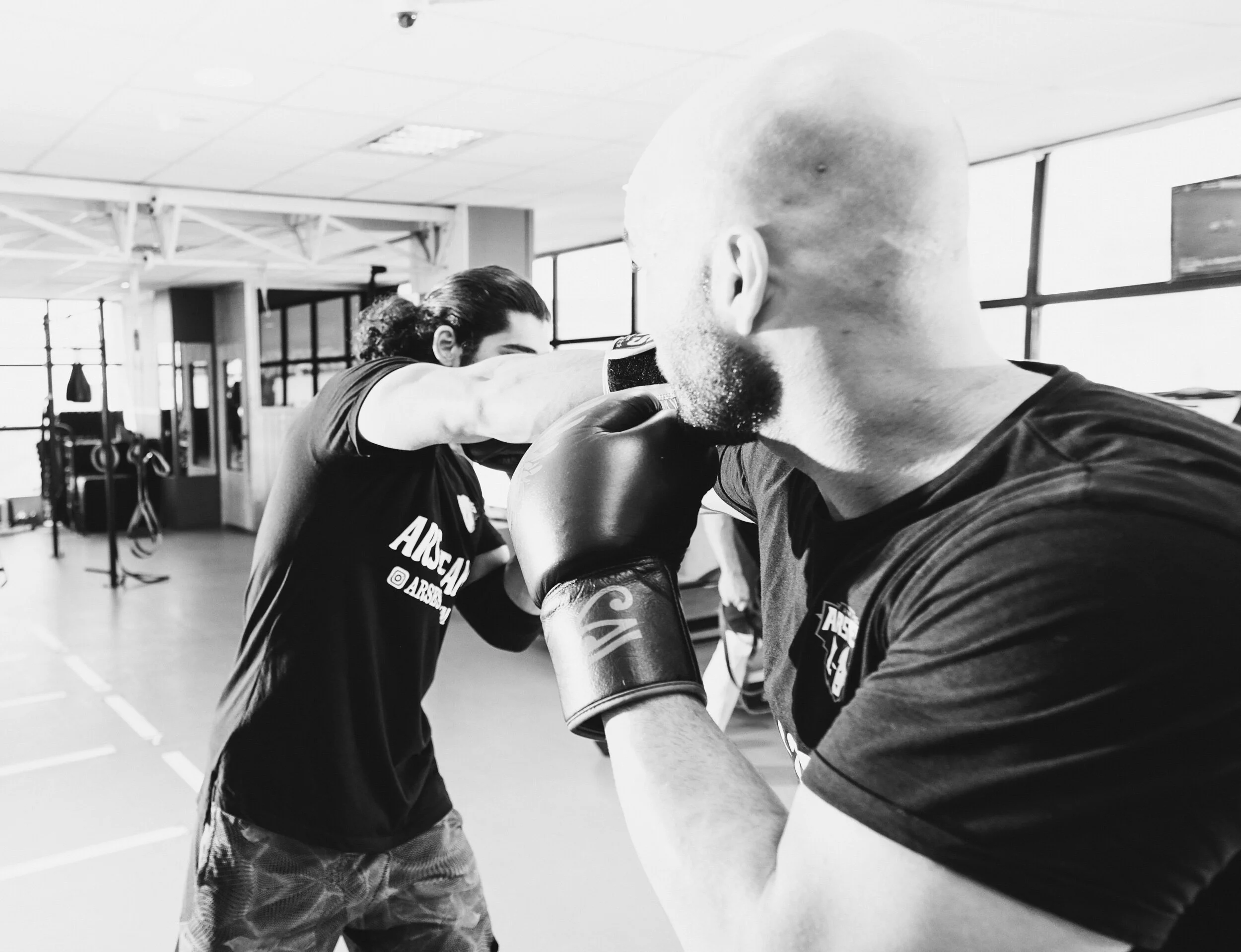
What boxing drills can be done with a partner? Partnerwork is the cooperative practice of techniques that gives boxers a safe, light, and slow glimpse into sparring without the risk of injury. It differs from sparring by being highly specific and requiring less protective equipment, with the core challenge being a clear definition of the task by the coach.
How to Shadowbox
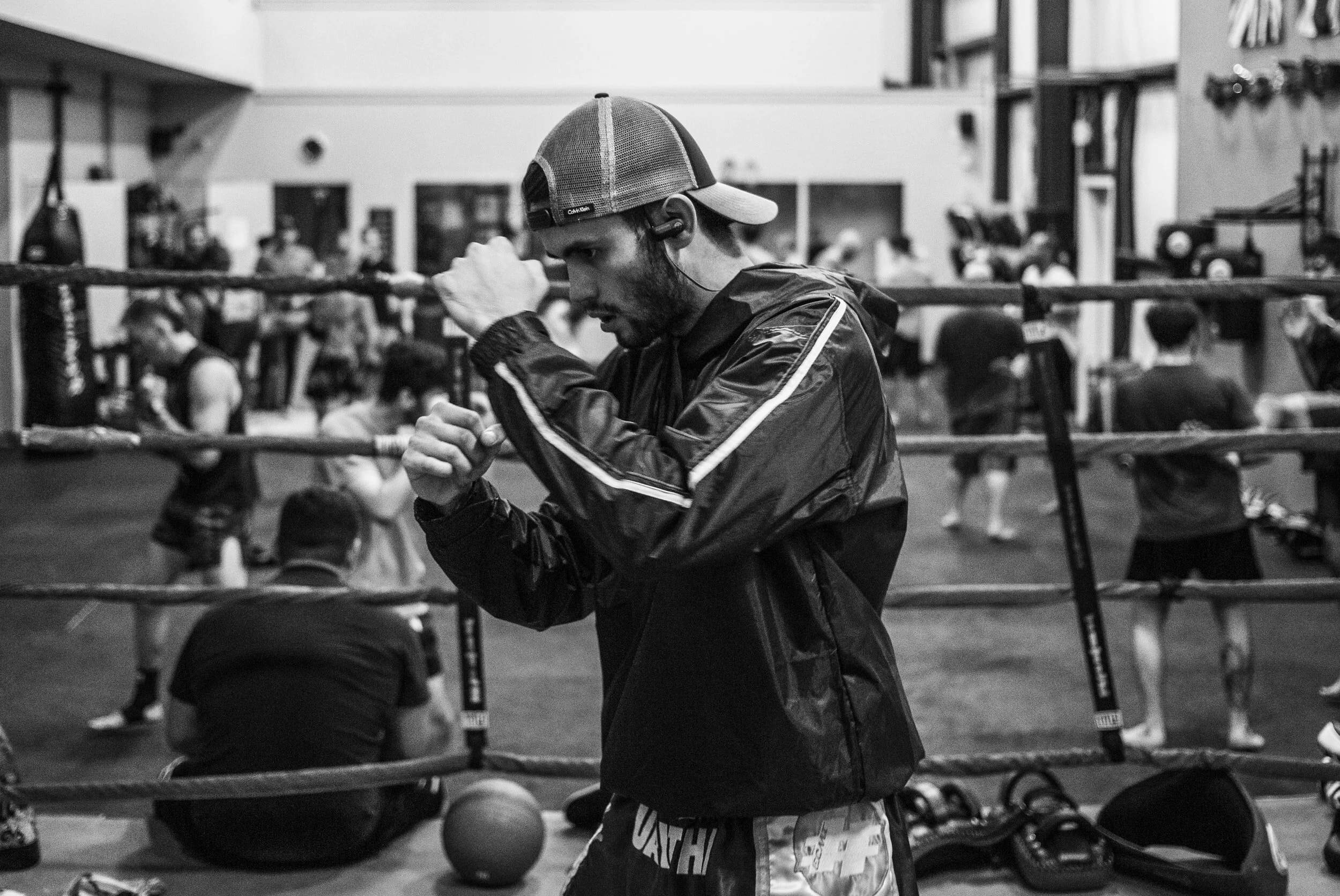
Shadowboxing is a crucial, high-intensity training activity where a boxer visualizes and reacts to an imaginary opponent, serving as an excellent cardio workout and tool for improving technique. To prevent aimless movement and reinforce good habits, boxers must bring purpose to their practice by using techniques like Self-Assessment (filming oneself) and Opponent Assessment (imagining a specific fighter or style).

Warming Up with The Borg Scale
The Borg Scale of Perceived Exertion (RPE) is a numerical tool, ranging from 6 (No Exertion) to 20 (Maximal Exertion), used by coaches and athletes to subjectively gauge the intensity of their warm-up and training sessions. This scale is cleverly linked to heart rate, as multiplying the RPE score by 10 gives a decent estimate of the user's actual heart rate, with the target for a proper warm-up being 13 ("Somewhat Hard") to reach the target heart rate zone.

How to Uppercut
The Uppercut is a powerful, vertical punch thrown in an upwards arc, making it highly effective for catching an opponent off guard, especially a taller one, or serving as a potential finishing blow. To execute this punch, power is generated by rotating the hips and torso while maintaining proper body alignment, which also makes it an excellent exercise for working the core, arms, shoulders, and upper back.

4 Health Measures
Fitness professionals rely on four basic measurements — Body Mass Index (BMI), Blood Pressure (BP), Resting Heart Rate (RHR), and Waist-to-Hip Ratio (WHR) — to broadly assess an individual's health and risk for metabolic complications. These simple metrics provide essential starting points for a training program and offer clear data on the effectiveness of lifestyle changes over time.

Periodization: A Beginner's Guide to Training Cycles and Progression
Take your training to the next level with periodization, the practice of dividing your training into cycles to maximize results. Discover the benefits of periodization and how to apply it to your own training programs in this informative post. From macrocycles to microcycles, explore the different types of cycles and how to progress over time for long-term success. Whether you're a beginner or an experienced athlete, this post is a must-read for anyone looking to optimize their training.

The Kinetic Chain Principle
What is good movement? The Kinetic Chain Principle (KCP) views boxing movement as a functional sequence of linked body parts, essential for transferring power efficiently from the lower body to the upper body. A full engagement of this chain, from the ground up through the hips and trunk, is crucial for generating maximum punching power and maintaining vital balance and stability.

First Time Sparring Guide
What are some tips for boxers doing their first sparring session? Sparring is contact-based training that simulates a real fight, ideally performed with a partner of equal weight and skill, and is supervised by a qualified coach. To prepare for your first session, you should progress from conditional sparring (light contact with specific technical conditions) to full sparring (without extra conditions).

How Fit is the World Today?
This report provides a global snapshot by combining population figures with crucial World Health Organization data on insufficient adult physical activity. This compilation allows for an examination of how different populations around the world engage with fitness, revealing a wide spectrum of activity levels across various continents. The information invites deeper exploration into the diverse health landscapes of nations globally.

Here’s an IDEA: How to Clearly Demonstrate Techniques
The IDEA acronym — Introduction, Demonstration, Explanation, and Action — is a powerful, whole-to-parts approach coaches use to clearly and efficiently teach movement techniques. It begins by stating the name and showing the complete technique, then breaks it down into component parts, before finally commanding the practice.